
Calpodes
Hübner, 1819
Species Guides
1- Calpodes ethlius(Brazilian Skipper)
Calpodes is a small of (Hesperiidae) comprising two recognized . The genus is best known for Calpodes ethlius, commonly called the Brazilian skipper or larger canna leafroller, which has been introduced to parts of North America and is associated with canna plants. Calpodes species are characterized by rapid, darting typical of skippers and larvae that roll leaves of plants.
Pronunciation
How to pronounce Calpodes: /kælˈpoʊdiːz/
These audio files are automatically generated. While they are not always 100% accurate, they are a good starting point.
Identification
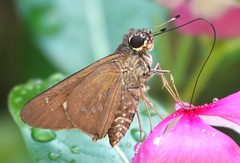
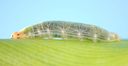
are medium-sized skippers with the characteristic hooked tips of Hesperiidae. Calpodes ethlius has brownish-orange wings with pale spots and a relatively robust body. Larvae are distinctive: green with a dark and a pale lateral stripe, and they construct leaf rolls by folding leaves and securing them with silk.
Images
Habitat
Associated with open, sunny environments where plants grow. Calpodes ethlius has been observed in gardens, agricultural areas, and disturbed where canna lilies (Canna spp.) are present. Native range includes tropical and subtropical regions of the Americas.
Distribution
Native to the Neotropical region, ranging from South America through Central America and the Caribbean. Calpodes ethlius has been introduced to and established in the southeastern United States (Florida, Georgia, and Gulf Coast states). Calpodes salius occurs in the Guianas and northern South America.
Seasonality
are active year-round in tropical portions of the range. In temperate introduced regions (southeastern United States), activity peaks during warm months, with multiple possible where remain available.
Diet
Larvae feed on leaves of Canna (Cannaceae), rolling leaves and feeding from within. This association is well-documented for C. ethlius; host records for C. salius are less comprehensive but likely involve related plants. have been observed visiting flowers for nectar.
Host Associations
- Canna - larval primary ; larvae roll leaves and feed internally
Life Cycle
Complete with , larva, pupa, and stages. Larvae construct characteristic leaf rolls: they cut a leaf section, fold it over, and bind it with silk to form a shelter where they feed and eventually pupate. occurs within the leaf roll. Multiple occur annually in favorable climates.
Behavior
Larvae are solitary and remain concealed within leaf rolls during daylight, emerging to feed at night. exhibit rapid, erratic typical of skippers, with quick wing beats interspersed with glides. They are and frequently visit flowers.
Ecological Role
As a herbivore on Canna, larvae can reach pest densities in ornamental plantings and gardens. The serves as prey for and other natural enemies. may contribute to pollination of visited flowers, though this role is secondary to their herbivorous larval stage.
Human Relevance
Calpodes ethlius is economically significant as a pest of ornamental canna lilies in horticulture. The "larger canna leafroller" reflects its impact on cultivated Cannaceae. It is also a subject of interest among watchers in the southeastern United States due to its introduced status and distinctive larval .
Similar Taxa
- UrbanusSimilar brown skipper appearance and leaf-rolling larval ; Urbanus typically have more angular wing margins and different plant associations (often legumes).
- PanoquinaOverlapping distribution and skipper ; Panoquina often show more pronounced wing markings and are associated with grasses rather than Cannaceae.
- Asbolis capucinus (Monk skipper)Similar size and brown coloration in southeastern US; distinguished by more uniform wing coloration and grass-feeding larvae rather than leaf-rolling on broad-leaved plants.