
Calpodes ethlius
(Stoll, 1782)
Brazilian Skipper, Larger Canna Leafroller, Canna Skipper
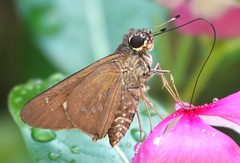
Calpodes ethlius is a in the Hesperiidae, commonly known as the Brazilian skipper or canna skipper. It is notable for its broad Neotropical distribution, ranging from the southern United States through Central America to Argentina. The is strongly associated with Canna plants, whose leaves its larvae roll into protective shelters. feed on nectar from a variety of flowering plants, with specific preferences varying by region.

Pronunciation
How to pronounce Calpodes ethlius: //kælˈpoʊdiːz ˈɛθliəs//
These audio files are automatically generated. While they are not always 100% accurate, they are a good starting point.
Identification
Distinguished from similar skippers by its association with Canna plants and larval leaf-rolling . The 'larger canna leafroller' suggests it is larger than related leaf-rolling skippers, though specific comparative measurements are not provided. are active in late summer in northern parts of the range, year-round in tropical regions.
Images
Appearance
Wingspan 45–61 mm. have the characteristic rapid, darting typical of skippers. Coloration and pattern details not specified in sources.
Habitat
Associated with areas supporting Canna plants, the larval . Occurs in subtropical and tropical environments including gardens, wetlands, and disturbed where Cannas grow. Found from sea level to moderate elevations throughout its range.
Distribution
Native to the Neotropical region. In the United States: southern Florida (resident, year-round), southern Texas, southern Nevada, northern Texas, Illinois, and Massachusetts (strays and temporary colonies only). Permanent range extends through the West Indies, Mexico, Central America to Argentina. Also recorded from the Galápagos Islands.
Seasonality
Year-round activity in Florida and tropical regions. Late summer in northern range periphery. Southern Texas: multiple April–December. Arizona: two generations July–November.
Diet
feed on nectar. In Arizona, specifically observed on . In Rica, recorded from large white or pale yellow flowers of woody lianas, trees, and shrubs. Larvae feed on Canna .
Host Associations
- Canna - Larval plantLarvae roll or fold leaf ends into tents
Life Cycle
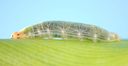
Larvae construct shelters by rolling or folding Canna leaf ends into tents. Multiple per year in favorable climates. Specific details and strategy not documented in sources.
Behavior
Larvae exhibit leaf-rolling on plants, creating protective tents. have rapid, erratic typical of skippers.
Ecological Role
of flowering plants in its range. Larvae function as herbivores on Canna, potentially influencing plant growth through leaf damage and shelter construction.
Human Relevance
Considered a pest of ornamental Canna plants in gardens due to larval leaf-rolling damage. 'canna skipper' reflects this association.
Similar Taxa
- Other Calpodes species members share Canna association and leaf-rolling larval ; C. ethlius distinguished by larger size
- Other Hesperiinae skippersSimilar rapid and general ; plant specificity and geographic range aid identification