
Phocides polybius
(Fabricius, 1793)
guava skipper, bloody spot, Southern Guava Skipper
Phocides polybius, commonly known as the guava skipper or bloody spot, is a Neotropical in the skipper Hesperiidae. First described by Johan Christian Fabricius in 1793, this ranges from the southernmost United States through Central America to Argentina. It is notable for its association with Psidium plants, particularly guava, and is frequently observed at flowers where it allows close approach.

Pronunciation
How to pronounce Phocides polybius: /ˈfoʊsɪˌdiːz pəˈlɪbiəs/
These audio files are automatically generated. While they are not always 100% accurate, they are a good starting point.
Identification
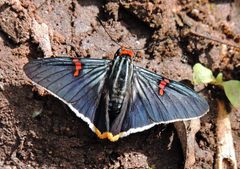
The combination of medium size (42–63 mm wingspan), a visible reddish spot on the wings, and the hooked clubs distinguishes this from other skippers. In southern Texas, it may be confused with other Pyrginae skippers, but the "bloody spot" marking and association with guava vegetation provide supporting identification cues. are known to make long stops at flowers, facilitating observation and photography.
Images
Appearance
Wingspan measures 42–63 mm. The "bloody spot" refers to a distinctive reddish marking on the wings. As a member of Hesperiidae, it possesses the characteristic robust, -like body and hooked tips typical of skippers.
Habitat
Tropical and subtropical environments. In the United States, occurs in the Lower Rio Grande Valley of southern Texas. Associated with areas supporting Psidium plants, including cultivated and wild guava.
Distribution
Native to the Americas. Range extends from the Lower Rio Grande Valley of southern Texas, United States, south through Mexico and Central America to Argentina. Three recognized: P. p. polybius (Suriname, Guyana), P. p. lilea (Lower Rio Grande Valley of Texas, Mexico to Colombia and Brazil), and P. p. phanias (Argentina, Brazil).
Seasonality
Multiple per year. recorded on wing in February, April, and June through December in southern Texas. Year-round activity likely in tropical portions of range.
Diet
Larvae feed on Psidium , specifically Psidium guajava (common guava) and Psidium cattleianum (strawberry guava). probably feed on flower nectar; has been observed attracted to Eugenia uniflora.
Host Associations
- Psidium guajava - larval food plantcommon guava
- Psidium cattleianum - larval food plantstrawberry guava
- Eugenia uniflora - nectar sourceobserved in Argentina
Life Cycle
Complete : , larva (caterpillar), pupa (chrysalis), . Specific details of development duration and number of per year not documented.
Behavior
frequently make long stops at flowers, allowing close approach and excellent photographic opportunities. This sedentary at nectar sources is notable among observers.
Ecological Role
through nectar feeding. Larval herbivore on Psidium .
Human Relevance
Considered a favorite among enthusiasts and photographers due to its cooperative at flowers. Minor potential economic impact as a herbivore on cultivated guava. Featured in children's science literature as an example of tropical butterfly diversity.
Similar Taxa
- Other Phocides species members share similar skipper and Neotropical distribution; specific markings and range distinguish P. polybius
- Other Pyrginae skippers in southern TexasSimilar size and pattern; P. polybius distinguished by reddish wing spot and association with Psidium