
Epargyreus
Hübner, 1819
Silverdrops, Flasher butterflies
Species Guides
3- Epargyreus clarus(Silver-spotted Skipper)
- Epargyreus huachuca
- Epargyreus zestos(zestos skipper)
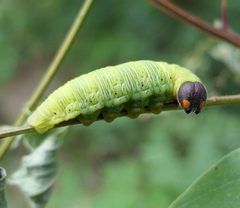
Epargyreus is a of in the Hesperiidae, commonly known as silverdrops or flasher butterflies. The genus name derives from Greek argyros meaning 'silver,' referring to the characteristic white spot on the hindwing. occur across the Nearctic and , with the best-known species being Epargyreus clarus (silver-spotted skipper), which ranges from southern Canada through the United States to South America. Larvae construct distinctive leaf shelters using silk and are known for '-shooting' —expelling excrement up to 40 times their body length away from their shelters.
Pronunciation
How to pronounce Epargyreus: /ɛˌpɑrˈdʒɪriəs/
These audio files are automatically generated. While they are not always 100% accurate, they are a good starting point.
Identification
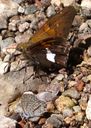
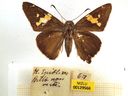
The is distinguished by the presence of a large white or silvery spot on the surface of each hindwing, from which the 'silverdrops' derives. Members are relatively large skippers with robust bodies. -level identification requires examination of wing patterns, genitalia, and geographic distribution. Epargyreus clarus is particularly recognizable by its dark brown wings with golden-yellow bands and the prominent silver-white patch on the hindwing underside.
Images
Distribution
The occurs in the Nearctic and . Individual have distinct ranges: Epargyreus clarus extends from southern Canada through the United States to Mexico and South America; E. zestos occurs in Florida and the Antilles; E. exadeus ranges from Guatemala through Central America to Brazil and Argentina; and other species are restricted to specific regions such as Jamaica (E. antaeus), Mexico (E. aspina, E. brodkorbi, E. orizaba), and Argentina (E. tmolis).
Host Associations
- Fabaceae - larval Larvae feed on various legumes; Epargyreus clarus has been documented on soybean (Glycine max), black locust (Robinia pseudoacacia), kudzu (Pueraria montana), and other Fabaceae
- Soybean (Glycine max) - larval Epargyreus clarus larvae occasionally found on soybean but rarely reach economically damaging levels
- Black locust (Robinia pseudoacacia) - larval Documented for Epargyreus clarus
- Kudzu (Pueraria montana) - larval Accepted plant; larvae show no preference between kudzu, black locust, or red oak for shelter construction
Life Cycle
The exhibits multivoltine with both non-diapausing summer and diapausing winter generations. Larvae construct elaborate leaf shelters by cutting leaves and lashing them together with silk, forming structures described as 'tepees,' 'bungalows,' or 'condominiums.' occurs within these shelters. Summer generation pupal duration is 10–14 days, while winter generation pupae for several months. pupae survive at significantly higher rates than summer pupae despite longer exposure periods.
Behavior
Larvae are notable for '-shooting' —extruding their hind ends from shelters to propel excrement up to 40 times their body length away, potentially to avoid attracting . Larvae hide in silk-constructed leaf shelters during daylight hours and emerge at night to feed. exhibit rapid, darting typical of skippers.
Ecological Role
Larvae function as herbivores on leguminous plants, with occasional presence in agricultural soybean fields. The contributes to pollination as visit flowers. Larval leaf shelters and -shooting represent anti- adaptations.
Human Relevance
Epargyreus clarus is among the most widespread and recognizable North American skippers, valued by watchers. Larvae occasionally occur in soybean fields but rarely cause economic damage. The has been studied for its pupal survival , revealing counterintuitively higher mortality during short summer than long winter .
Similar Taxa
- Other Hesperiidae generaMay share general skipper but lack the characteristic large silver-white spot on the hindwing that defines Epargyreus
- UrbanusAnother Eudaminae with similar robust body form but different wing pattern; lacks prominent hindwing silver spot
More Details
Etymology
The name Epargyreus combines Greek elements, with argyros meaning 'silver' referring to the white spot on the hindwing
Species diversity
The contains approximately 20 recognized , with Epargyreus clarus being the most widespread and well-studied
Pupal survival paradox
Research by Brackley and Weiss (2023) demonstrated that pupae of Epargyreus clarus survive at higher rates (65% maximum mortality) than summer pupae (75% mortality in just 10 days), despite months-long exposure versus days-long exposure. Daily per capita mortality rates were an order of magnitude higher in summer, attributed to increased vertebrate activity.
Sources and further reading
- BugGuide
- Wikipedia
- GBIF taxonomy match
- iNaturalist taxon
- NCBI Taxonomy
- Catalogue of Life
- Chrysalis Conundrum: Why One Butterfly Species' Pupae Fare Better in Winter Than Summer
- Gelechiidae | Beetles In The Bush
- WGNSS | Beetles In The Bush
- predator avoidance | Beetles In The Bush | Page 2
- economic pests | Beetles In The Bush
- Silver-Spotted Skipper; Epargyreus clarus (Cramer) (Insecta: Lepidoptera: Hesperidae: Pyrginae)
- Supplementary notes on the distribution of Epargyreus clarus in Southern California (Hesperiidae)