
Autochton cellus
(Boisduval & Le Conte, 1833)
Autochton cellus is a of in the Hesperiidae, Pyrginae. It occurs in North America and Middle America. As a member of the Autochton, it belongs to a group of relatively small, dark-colored skippers often associated with forested .
Pronunciation
How to pronounce Autochton cellus: //ɔːˈtɒktən ˈsɛləs//
These audio files are automatically generated. While they are not always 100% accurate, they are a good starting point.
Identification
Distinguished from other Autochton by wing pattern details, particularly the size, number, and arrangement of pale forewing spots. Compared to similar dark skippers in the Carrhenes and Polygonus, Autochton cellus has a more compact wing shape and specific spot configuration. Examination of genitalia may be required for definitive identification from closely related species.
Images
Appearance
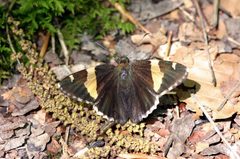
are small to medium-sized skippers with dark brown to blackish wings. The forewings typically show small pale spots or markings. The hindwings are usually darker with reduced or absent markings. The body is robust with relatively large , typical of the Hesperiidae . have hooked or curved clubs at the tips.
Habitat
Occupies tropical and subtropical forested environments, including edges and clearings. Associated with lowland and foothill forests in its range.
Distribution
Recorded from Middle America and North America. Specific countries include Mexico and Central American nations, with range extending into the southern United States.
Similar Taxa
- Autochton longipennisOverlapping range and similar dark coloration; differs in forewing spot pattern and wing proportions.
- Autochton zarexSympatric in parts of range; distinguished by subtle differences in wing markings and size.
- Carrhenes canescensSimilar dark skipper appearance; differs in wing shape and antennal club structure.
More Details
Taxonomic History
Originally described as Eudamus cellus by Boisduval and Le Conte in 1833, later transferred to the Autochton.