
Polygonus
Hübner, 1825
Species Guides
4- Polygonus arizonensis(North America Polygon)
- Polygonus histrio(Florida Hammock Skipper)
- Polygonus pardus(Spotted Polygon)
- Polygonus savigny(Manuel's skipper)
Polygonus is a of spread-winged skippers ( Hesperiidae, Pyrginae) distributed across the Nearctic and Neotropical regions. The genus was established by Hübner in 1825. in this genus are characterized by their distinctive resting posture with wings held partially open rather than folded vertically. The genus is well-represented in citizen science observations, with over 2,700 records documented.
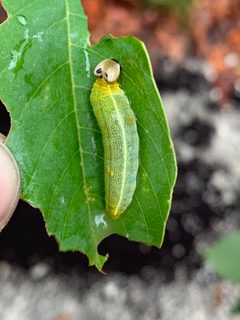
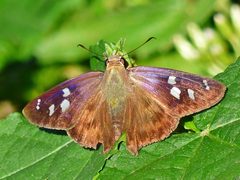
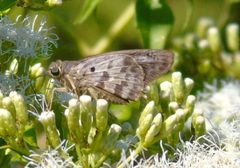
Pronunciation
How to pronounce Polygonus: //pəˈlɪɡənəs//
These audio files are automatically generated. While they are not always 100% accurate, they are a good starting point.
Identification
Members of Polygonus can be recognized as spread-winged skippers, a group distinguished by their habit of resting with wings held partially open at approximately 45-degree angles rather than closed vertically above the body. Specific diagnostic features for the relative to other Pyrginae genera are not documented in available sources.
Images
Habitat
occupied by Polygonus span Nearctic and Neotropical environments, though specific ecological requirements vary by species and remain incompletely documented.
Distribution
Nearctic and Neotropical regions.
Behavior
Resting posture with wings spread rather than folded vertically, characteristic of the spread-winged skipper group.
Similar Taxa
- Other Hesperiidae generaSimilar overall skipper ; distinguished by the spread-winged resting posture typical of Pyrginae and specifically the Polygonus.
- Pyrginae genera with spread-winged postureShare the characteristic wing posture; -level distinction requires examination of genitalia or wing pattern details not summarized in available sources.
More Details
Taxonomic note
The name Polygonus has also been applied to a fossil leatherback turtle , Psephophorus polygonus Meyer, 1847, from the middle Miocene of Slovakia. This represents a homonymy across entirely different taxonomic groups (Lepidoptera vs. Testudines).
Observation record
The is relatively well-documented in biodiversity databases, with approximately 2,774 observations recorded in iNaturalist as of source date.