
Datana drexelii
Edwards, H., 1884
Drexel's Datana Moth
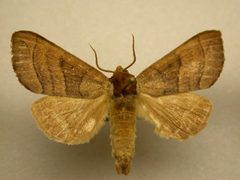
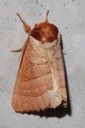
Datana drexelii, known as Drexel's Datana , is a of prominent moth in the Notodontidae. It was described by H. Edwards in 1884. The species is found in North America and is assigned MONA/Hodges number 7904. Like other members of the Datana, the larvae are likely late-season defoliators of hardwood trees.
Pronunciation
How to pronounce Datana drexelii: //ˈdætənə ˈdrɛksəlaɪ//
These audio files are automatically generated. While they are not always 100% accurate, they are a good starting point.
Identification
Can be distinguished from other Datana by specific morphological features, though detailed diagnostic characteristics require examination. The Datana contains multiple similar species that are often challenging to separate visually. The MONA/Hodges number 7904 provides a standardized reference for identification in North American faunal works.
Images
Distribution
North America. Specific records include southeastern Arizona (Chiricahua Mountains, Santa Rita Mountains, Huachuca Mountains) based on collecting trip reports.
Seasonality
active in July-August based on collecting records from Arizona. As a late-season defoliator, larvae likely present in late summer and early fall.
Behavior
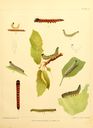
Larvae of the Datana are gregarious feeders, consuming leaves of plants in groups. This results in localized, heavy defoliation within tree .
Ecological Role
Larvae function as late-season defoliators of hardwood trees. Despite conspicuous damage, single defoliation events typically cause minimal long-term impact to tree health. Natural enemies regulate .
Human Relevance
May occasionally attract attention due to larval defoliation of ornamental or shade trees. Management is seldom necessary; mechanical removal of small larval clusters or targeted applications are options when aesthetic damage is unacceptable on high-value trees.
Similar Taxa
- Datana integerrimaWalnut caterpillar, another member of the Datana with similar larval and appearance; both are late-season defoliators with gregarious larvae
- Other Datana speciesMultiple in North America share similar and as prominent larvae feeding on hardwood foliage; examination often required for definitive identification
More Details
MONA/Hodges Number
7904
Taxonomic History
Described by H. Edwards in 1884; accepted status confirmed in major taxonomic databases including GBIF, Catalogue of Life, and NCBI
Sources and further reading
- BugGuide
- Wikipedia
- GBIF taxonomy match
- iNaturalist taxon
- NCBI Taxonomy
- Catalogue of Life
- Insects and mites that feed on leaves - AgriLife Extension Entomology
- Bug Eric: Wasp Wednesday: Ammophila procera
- Much Ado About Nothing? End-of-Summer Defoliation Heats Up
- Bug Eric: November 2010
- 2018 Arizona Insect Collecting Trip “iReport” | Beetles In The Bush