
Dasylophia anguina
(Smith, 1797)
black-spotted prominent
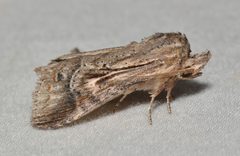
Dasylophia anguina, the black-spotted prominent, is a sexually dimorphic in the Notodontidae. Males display black streaks on the forewing with white hindwings, while females show a yellow-brown basal patch with gray hindwings. The exhibits geographic variation in voltinism, with one in northern regions and two or more in the south.
Pronunciation
How to pronounce Dasylophia anguina: //dæ.sɪˈloʊ.fi.ə æŋˈɡwaɪ.nə//
These audio files are automatically generated. While they are not always 100% accurate, they are a good starting point.
Identification
Distinguished from similar prominent moths by the combination of sharp rounded postmedian forewing line and black marginal spots. is pronounced: males with black forewing streaks and white hindwings versus females with yellow-brown basal patch and gray hindwings. These traits separate it from other Dasylophia and Notodontidae with more uniform wing patterns.
Images
Appearance
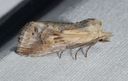
Wingspan 3–4.1 cm. Forewing with sharp, rounded postmedian line and black spots in lower marginal area. Male: black streaks in basal and forewing areas; hindwing white. Female: large yellow-brown patch in basal forewing area; hindwing gray.
Habitat
Occurs in open including fields, woodlands, and barrens. Found across a range of successional stages from early successional fields to mature woodland edges.
Distribution
Native to North America. Range extends from Manitoba and southern Quebec south to southern Florida, west to northeastern Texas. Canadian records include Alberta, Manitoba, and Saskatchewan; U.S. records include Vermont.
Seasonality
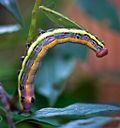
fly April through September. Larvae present May through November. One annually in northern range; two or more broods in southern range.
Life Cycle
Partially to multivoltine depending on latitude. Larval stage extends from May to November, overlapping with period in southern . Specific plant relationships and pupal not documented in available sources.
Similar Taxa
- Other NotodontidaeLack the distinctive sharp rounded postmedian line and pronounced in forewing pattern and hindwing color
More Details
Voltinism
number varies clinally: in north, or greater in south