
Pheosia rimosa
Packard, 1864
Black-rimmed Prominent, Fissured Prominent, False-sphinx
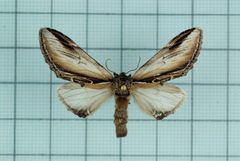
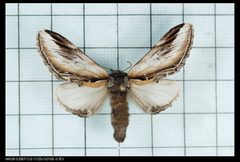
Pheosia rimosa is a in the Notodontidae, first described by Alpheus Spring Packard in 1864. It is widely distributed across North America with a notable gap in the southeastern United States. The exhibits a wingspan of 43–62 mm and are active from spring through fall. Larvae feed on leaves of Populus and Salix species. The Pheosia portlandia, previously considered a distinct Pacific coastal species, has been synonymized with P. rimosa.
Pronunciation
How to pronounce Pheosia rimosa: /fiːˈoʊziə rɪˈmoʊsə/
These audio files are automatically generated. While they are not always 100% accurate, they are a good starting point.
Identification
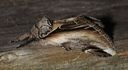
The combination of broad transcontinental North American distribution, spring-to-fall activity period, and association with Populus and Salix distinguishes this from other Notodontidae. The dark-rimmed forewing pattern is a key visual characteristic. Pheosia rimosa may be confused with other prominent moths in the Pheosia; accurate identification relies on wing pattern details and geographic context. The former species Pheosia portlandia is now recognized as .
Images
Habitat
Associated with supporting Populus and Salix , which serve as larval plants. These include riparian zones, deciduous woodlands, and areas with willow and poplar stands. Specific microhabitat preferences for are not documented.
Distribution
Transcontinental in North America, occurring from the Atlantic to Pacific coasts. Documented from Canadian provinces including Alberta, Manitoba, and Saskatchewan, and from the United States including Vermont. Notably less common in the southeastern United States. The Pheosia rimosa taiwanognoma occurs in Taiwan.
Seasonality
are on wing from spring through fall, representing a prolonged period spanning multiple months. Specific varies by latitude and local climate conditions.
Diet
Larvae feed on leaves of Populus (poplars, cottonwoods, aspens) and Salix (willows) . feeding habits are not documented.
Host Associations
- Populus - larval leaves
- Salix - larval leaves
Life Cycle
Complete with , larval, pupal, and stages. Larvae feed on plant foliage. Specific details regarding oviposition site, location, and stage are not documented in available sources.
Behavior
are and attracted to light. Specific behavioral details such as mating rituals, patterns, or defensive are not documented.
Ecological Role
Larvae function as primary consumers, feeding on leaves of deciduous trees and shrubs in the Populus and Salix. Their role in nutrient cycling and as a food source for has not been quantified. The contributes to the herbivore guild associated with early successional and riparian .
Human Relevance
No significant documented economic impact. The is not considered a major pest of ornamental or commercial Populus or Salix plantings. Of interest to lepidopterists and naturalists due to its wide distribution and distinctive appearance.
Similar Taxa
- Pheosia portlandiaPreviously treated as a distinct occurring in Pacific coastal forests; now synonymized with P. rimosa based on research concluding they represent the same species.
- Other NotodontidaeThe prominent contains numerous with cryptic forewing patterns; accurate identification requires examination of wing pattern details, particularly the fissured line and dark marginal band characteristic of P. rimosa.
More Details
Taxonomic History
Pheosia portlandia was historically recognized as a separate replacing P. rimosa in Pacific coastal forests. Research has concluded that P. portlandia is a synonym of P. rimosa, unifying the across North America.
Subspecies
Two are recognized: Pheosia rimosa rimosa (North America) and Pheosia rimosa taiwanognoma Nakamura, 1973 (Taiwan). The Taiwanese subspecies represents a disjunct Asian distribution.
Sources and further reading
- BugGuide
- Wikipedia
- GBIF taxonomy match
- iNaturalist taxon
- NCBI Taxonomy
- Catalogue of Life
- Another look at North America’s most beautiful longhorned beetle | Beetles In The Bush
- Periodical Cicadas, 2024: Entomologists Prepare for the Six-Week Serenade
- New Research Reveals How Flesh Flies Hear
- North America’s smallest cicada | Beetles In The Bush