
Nycteola
Hübner, 1822
Nycteoline moths
Species Guides
6- Nycteola cinereana(Grey Midget Moth)
- Nycteola columbiana
- Nycteola fletcheri
- Nycteola frigidana(Frigid Owlet)
- Nycteola metaspilella(forgotten frigid owlet)
- Nycteola
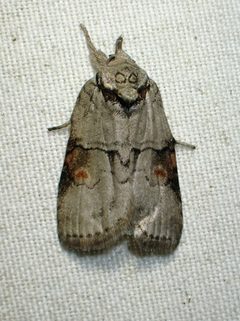
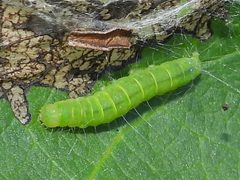
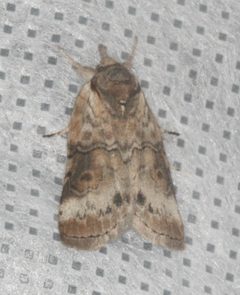
Nycteola is a of small in the Nolidae, distributed across the Old World and New World. The genus is characterized by rectangular forewings, trifine venation, and distinctive male genitalia. Larvae feed primarily on woody plants in Fagaceae and Salicaceae, with some considered potential forest pests. of at least some species overwinter and show highly variable wing coloration and pattern.
Pronunciation
How to pronounce Nycteola: //ˌnɪk.tiˈoʊ.lə//
These audio files are automatically generated. While they are not always 100% accurate, they are a good starting point.
Identification
Rectangular forewings separate Nycteola from many other small nolids. Male genitalia with broad uncus and axe--shaped saccular shield are diagnostic at level. Trifine venation and absence of tymbal organ provide additional characters. -level identification requires examination of genitalia; for example, N. coreana and N. costalis were synonymized based on genitalic similarity.
Images
Appearance
Small with rectangular forewings. Male genitalia feature a broad uncus, axe--shaped saccular shield, and complex valva structure. Wing coloration and pattern highly variable within ; for example, Nycteola revayana shows extensive variation in ground color. Absence of tymbal organ distinguishes the from some related nolids.
Habitat
Forest , particularly deciduous woodlands. Associated with plants including oaks (Quercus), willows (Salix), and related woody . Found in mountains, arboretums, parks, hedgerows, and fields where host trees occur.
Distribution
Old World distribution concentrated in Western Palaearctic and Indomalayan Regions; present in New World except Polar Regions. Recorded from Europe, Russia, Caucasus, Turkey, Middle East, Iran, Central Asia, Afghanistan, Turkmenistan, India, Nepal, China, Russian Far East, Korea, Japan, and scattered North American locations including Vermont.
Seasonality
Activity patterns vary by . Nycteola revayana is primarily with on wing in autumn and spring, as adults; summer produced by from autumn/spring cohort. Some individuals may be , and supplemented by migrants from mainland Europe in this species.
Diet
Larvae feed on woody plants in Fagaceae (oaks), Salicaceae (willows and poplars); also reported on Myrtaceae and Juglandaceae. Specific documented include Quercus robur, Q. petraea, Salix eriocarpa, S. koreensis, and S. koriyanagi.
Host Associations
- Quercus robur - larval food plantpedunculate oak
- Quercus petraea - larval food plant oak
- Salix eriocarpa - larval food plant
- Salix koreensis - larval food plant
- Salix koriyanagi - larval food plant
- Fagaceae - larval food plantgeneral association
- Salicaceae - larval food plantgeneral association
- Myrtaceae - larval food plantreported but less documented
- Juglandaceae - larval food plantreported but less documented
Life Cycle
Primarily in studied : active in autumn and spring, as adults, with developing into summer . Some individuals may exhibit pattern. Overwintering as adults is a notable feature.
Behavior
overwinter, a relatively uncommon trait among small . Some supplemented by migrants from mainland Europe. Extensive wing pattern variation may serve as camouflage against bark and lichen backgrounds.
Ecological Role
Larvae function as folivores on economically important forest trees. Potential forest pest status suspected for some due to feeding on Fagaceae and Salicaceae.
Human Relevance
Potential pest status suspected for newly detected due to associations with forest trees. Nycteola dufayi, previously to Japan, was newly reported from the Korean peninsula in 2023, representing range expansion with potential economic implications for forestry.
Similar Taxa
- Other Nolidae generaNycteola distinguished by rectangular forewings, trifine venation, and absence of tymbal organ; many related nolids have different wing shape or possess tymbal organs for sound production.
- TortricidaeSimilar small size and resting posture; separated by venation pattern and genitalic structure—Nycteola has trifine venation typical of Noctuoidea rather than the venation of Tortricidae.
More Details
Taxonomic history
The has undergone recent taxonomic revision, with synonymy of N. costalis under N. coreana confirmed. Nycteola dufayi was described as to Japan but has now been recorded from Korea, representing first continental record.
Genomic resources
sequence available for Nycteola revayana: 621.0 Mb assembly with 26 chromosomal pseudomolecules (24 + Z ), 19,235 protein-coding genes, and 15.25 kb mitochondrial genome.