
Plagiomimicus tepperi
(Morrison, 1875)
Plagiomimicus tepperi is a of owlet moth in the Noctuidae, originally described as Schinia tepperi by Morrison in 1875. It belongs to the Stiriinae and tribe Stiriini. The species is known from North America, with 222 observations recorded on iNaturalist. Like other members of its , it is attracted to lights at night.
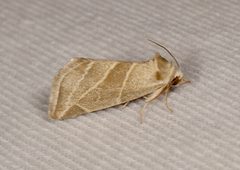
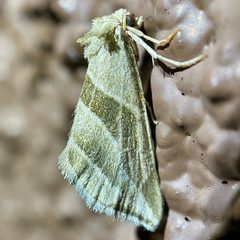
Pronunciation
How to pronounce Plagiomimicus tepperi: //ˌplædʒi.oʊˈmɪmɪkəs ˈtɛpəri//
These audio files are automatically generated. While they are not always 100% accurate, they are a good starting point.
Identification
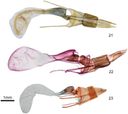
Members of the Plagiomimicus can be distinguished from similar noctuids by their relatively small size and characteristic wing patterns, though specific diagnostic features for P. tepperi are not well documented in available sources. The genus is part of the Stiriinae, which can be separated from other Noctuidae subfamilies by genitalic characters. Accurate -level identification within Plagiomimicus typically requires examination of genitalic structures.
Images
Habitat
Based on related observations, P. tepperi likely occurs in dry, mixed conifer forest with oaks, similar to where P. dimidiata has been recorded in New Mexico at elevations around 7,000 feet. The species is attracted to artificial lights at night.
Distribution
North America. Present in the southwestern United States, including New Mexico (Grant County).
Behavior
Attracted to blacklights and porch lights at night. No other behavioral details are documented.
Similar Taxa
- Plagiomimicus dimidiata with similar appearance and preferences; both are attracted to lights in southwestern U.S. conifer forests. P. dimidiata has been documented from New Mexico and may occur sympatrically with P. tepperi.
More Details
Taxonomic History
Originally described as Schinia tepperi by Morrison in 1875, later transferred to the Plagiomimicus.