
Cirrhophanus triangulifer
Grote, 1872
goldenrod stowaway, tickseed moth
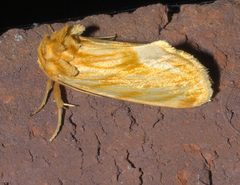
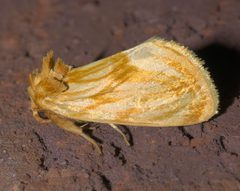
Cirrhophanus triangulifer is a noctuid known by the goldenrod stowaway and tickseed moth. The was first described by Augustus Radcliffe Grote in 1872. It is a that frequents yellow-flowered composite plants, with larvae specializing on Bidens species. The species occurs across eastern and central North America, with adults active in late summer.

Pronunciation
How to pronounce Cirrhophanus triangulifer: /ˌsɪrəˈfeɪnəs traɪˈæŋɡjʊlɪfər/
These audio files are automatically generated. While they are not always 100% accurate, they are a good starting point.
Identification
have a wingspan of 30–44 mm. The can be distinguished from by its association with yellow-flowered composites and its presence during daytime hours, unusual for a noctuid . The specific epithet 'triangulifer' refers to triangular markings, though detailed pattern descriptions are not available in the provided sources.
Images
Habitat
are found on flowers of Solidago, Coreopsis, Bidens, and other yellow-flowered . Larval is associated with Bidens species, including Bidens bipinnata.
Distribution
Eastern and central North America: United States from New York to Florida, west to Texas and Oklahoma, north to Wisconsin. In Canada, recorded only from Ontario.
Seasonality
are on wing from August to September.
Diet
Larvae feed on Bidens , including Bidens bipinnata. feeding habits are not explicitly documented.
Host Associations
- Bidens bipinnata - larval plant
- Solidago - nectar sourceflowers visited by
- Coreopsis - nectar sourceflowers visited by
- Bidens - nectar sourceflowers visited by
Behavior
are and can be found resting on or visiting yellow-flowered composite plants during the day, an unusual for a noctuid .
Human Relevance
The serves as a of yellow-flowered native plants. No economic or pest significance has been documented.
Similar Taxa
- Other Cirrhophanus speciesC. triangulifer can be distinguished by its and specific association with yellow-flowered composites; likely differ in , use, or geographic range.