
Euchalcia albavitta
(Ottolengui, 1902)
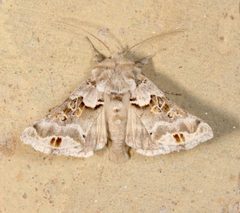
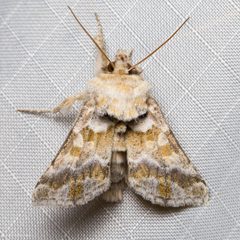
Euchalcia albavitta is a of looper in the Noctuidae. It was first described by Ottolengui in 1902 under the basionym Autographa albavitta. The species is found in North America and has been assigned the Hodges number 8903. It is classified within the Plusiinae, a group commonly known as loopers due to their characteristic looping larval locomotion.

Pronunciation
How to pronounce Euchalcia albavitta: //juːˈkælsiə ælbəˈvɪtə//
These audio files are automatically generated. While they are not always 100% accurate, they are a good starting point.
Identification
Euchalcia albavitta can be distinguished from similar looper moths by its specific wing pattern and coloration, though detailed diagnostic features require examination of and original descriptions. The Euchalcia contains that often exhibit metallic or iridescent markings on the forewings. Accurate identification typically requires reference to genitalia and comparison with closely related species in the Plusiinae .
Images
Distribution
North America
Similar Taxa
- Other Euchalcia speciesMembers of the Euchalcia share similar body plan and wing , requiring careful examination of pattern details and genitalia for definitive separation.
- Other Plusiinae loopersThe Plusiinae contains many with looping larvae and similar ; E. albavitta is distinguished by its specific wing pattern and geographic distribution.
More Details
Nomenclature
The was originally described as Autographa albavitta by Ottolengui in 1902 and later transferred to the Euchalcia. The specific epithet 'albavitta' likely refers to a white stripe (from Latin 'alba' = white, 'vitta' = band or stripe) on the wings, though this requires confirmation from the original description.
Research significance
The Euchalcia has been subject to recent molecular phylogenetic studies, including using the mitochondrial COI gene. Research on Central Asiatic Euchalcia has revealed significant genetic divergence among high-mountain , though E. albavitta itself has not been specifically included in published molecular studies to date.