
Sympistis forbesi
Zacharczenko & Wagner, 2014
Forbes' Sallow
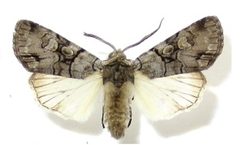
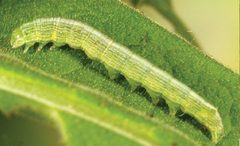
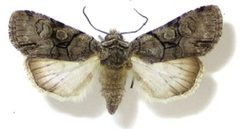
Sympistis forbesi is a noctuid described in 2014 from the north-central United States. The is named in honor of entomologist William Trowbridge Merrifield Forbes. are active in late summer with a single . Larvae are specialized feeders on Triosteum species (Caprifoliaceae), with green bodies and reddish coloration. The species has experienced range contraction, with apparent extirpation from its eastern distribution in New York and New Jersey.
Pronunciation
How to pronounce Sympistis forbesi: //sɪmˈpɪstɪs ˈfɔrbzi//
These audio files are automatically generated. While they are not always 100% accurate, they are a good starting point.
Identification
This can be distinguished from other Sympistis by its specific association with Triosteum plants and its known distribution in Iowa, Illinois, and Minnesota. The 2014 description date makes it one of the more recently described North American noctuids. are active in late summer, which may help separate them from sympatric with different periods. Dissection of genitalia is likely required for definitive identification, as is standard for the .
Images
Habitat
Associated with supporting Triosteum (T. perfoliatum and possibly T. aurantiacum), which typically occur in woodland and forest edge environments. Specific habitat structure for the itself is not well documented.
Distribution
Currently known from Iowa, Illinois, and Minnesota. Historically recorded from New York and New Jersey, but believed extirpated from these eastern portions of the range.
Seasonality
are on wing in late summer. One per year ().
Diet
Larvae feed on Triosteum perfoliatum and possibly Triosteum aurantiacum ( Caprifoliaceae). feeding habits unknown, but typical for Noctuidae, adults may feed little or not at all.
Host Associations
- Triosteum perfoliatum - larval confirmed plant
- Triosteum aurantiacum - larval possible plant
Life Cycle
: one per year. Larval development occurs on Triosteum plants. details not documented. emerge in late summer.
Behavior
period concentrated in late summer. Specific (mate location, oviposition, defensive behaviors) not documented in available sources.
Ecological Role
Larval herbivore on Triosteum . Potential prey for and , though specific interactions not documented. Role in pollination unknown.
Human Relevance
Named in honor of William Trowbridge Merrifield Forbes, a prominent entomologist. No economic or medical significance documented. The ' apparent extirpation from parts of its range may reflect broader patterns of loss or environmental change in the eastern United States.
Similar Taxa
- Other Sympistis speciesSympistis is a large with many similar-appearing ; genitalia dissection typically required for definitive identification. S. forbesi can be separated by its late summer period and association with Triosteum .
More Details
Etymology
The specific epithet forbesi honors William Trowbridge Merrifield Forbes (1885–1968), an American entomologist known for his work on Lepidoptera, particularly the classification of Noctuoidea.
Conservation Status
The has undergone apparent range contraction, with extirpation from New York and New Jersey. This pattern suggests potential vulnerability, though formal conservation status has not been assessed.