
Pyreferra ceromatica
(Grote, 1874)
Anointed Sallow, anointed sallow moth
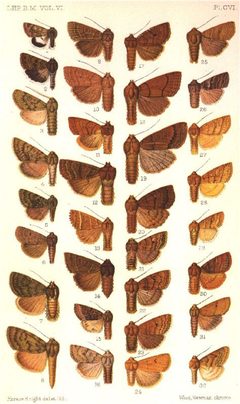
Pyreferra ceromatica, the anointed sallow , is a noctuid moth native to North America. The was described by Augustus Radcliffe Grote in 1874. Northern , including those in Connecticut, are believed to be extirpated; the state lists it as a species of special concern. Southern populations persist and remain associated with witch-hazel plants.
Pronunciation
How to pronounce Pyreferra ceromatica: //ˌpaɪ.rəˈfɛr.ə ˌsɛr.əˈmæt.ɪ.kə//
These audio files are automatically generated. While they are not always 100% accurate, they are a good starting point.
Images
Distribution
Native to North America. Present in southern portions of its range. Believed extirpated from Connecticut, where it was historically recorded.
Diet
Larvae feed primarily on witch-hazel (Hamamelis); southern may also use Fothergilla. visit sap flows of maples and birches and likely depend heavily on red maple flowers.
Host Associations
- Hamamelis - larval foodprimary ; historically virtually exclusive for northern
- Fothergilla - larval foodpossible for some southern
- Acer rubrum - foodflowers heavily utilized
- Acer - foodsap flows visited
- Betula - foodsap flows visited
Human Relevance
Listed as a of special concern in Connecticut due to apparent extirpation of northern . Conservation concern reflects loss and plant availability.
More Details
Conservation Status
Connecticut believed extirpated; southern populations remain extant but may be vulnerable due to specialized plant associations.