
Lithophane subtilis
Franclemont, 1969
Subtle Pinion
Lithophane subtilis is a of or dart moth in the Noctuidae, described by Franclemont in 1969. It belongs to the Lithophane, a group of commonly known as pinions that are primarily active during late fall through early spring. The species is known from North America, with records primarily from the eastern and central regions of the continent. Like other members of its genus, it is likely and exhibits activity during the colder months when few other moth species are active.
Pronunciation
How to pronounce Lithophane subtilis: /ˌlɪθoʊˈfeɪnə ˈsʌbtɪlɪs/
These audio files are automatically generated. While they are not always 100% accurate, they are a good starting point.
Identification
Definitive identification requires examination of genitalia or molecular analysis. The can be distinguished from other Lithophane species by subtle differences in forewing pattern, particularly the fineness and arrangement of lines and spots. The MONA/Hodges number 9900 provides a standardized reference for North American identification. are most likely to be encountered during late fall through early spring, separating them from summer-active noctuid species. Similar species include other Lithophane pinions, particularly L. antennata and L. bethunei, from which it differs in genitalic structure and subtle wing pattern elements.
Images
Appearance
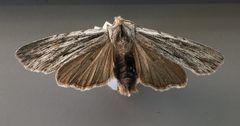
As a member of the Lithophane, likely exhibit the characteristic pinion : robust, furry-bodied moths with cryptic, mottled gray-brown coloration. The forewings typically show intricate patterns of lines and spots that provide camouflage against tree bark. The specific epithet 'subtilis' (Latin for 'subtle' or 'delicate') may refer to relatively subdued or fine wing patterning compared to . Adults possess the reduced mouthparts typical of the genus, as they do not feed as adults. Larvae are presumably smooth, cylindrical cutworms with the typical noctuid larval form.
Habitat
Specific associations are poorly documented. Based on -level patterns, likely inhabits deciduous and mixed forests, woodlands, and wooded suburban areas where larval plants occur. are attracted to light and may be found near forest edges, clearings, and areas with oak and other hardwood trees.
Distribution
Documented from North America. Specific range details are limited, but records suggest presence in eastern and central regions of the United States and possibly Canada. The appears to be less frequently encountered than some , suggesting either genuinely restricted distribution or cryptic habits that reduce detection.
Seasonality
are active during the cooler months, typical of the Lithophane. Activity period likely spans late autumn through early spring, with peak possibly occurring in late fall or early winter. This winter-active is unusual among Noctuidae and represents an ecological to reduce competition and pressure.
Life Cycle
Complete with , larva, pupa, and stages. Larval stage presumably occurs during spring and summer, feeding on herbaceous plants or woody vegetation before pupating in soil or leaf litter. Adults emerge in autumn and are active through winter, with reduced or absent feeding in the adult stage. Specific plants and detailed are unknown.
Behavior
are and attracted to light. The winter-active represents a distinctive behavioral within Noctuidae. Mating and -laying presumably occur during the adult activity period. Larvae likely exhibit typical , feeding at night and hiding in soil or debris during daylight hours.
Ecological Role
As a primary consumer in larval stages, contributes to nutrient cycling through herbivory. Serves as prey for various including birds, bats, and insectivorous arthropods. The unusual winter-active may provide an important food source for predators during a season when alternative prey is scarce.
Human Relevance
No documented economic importance. The is of interest to lepidopterists and naturalists due to its unusual seasonal activity pattern. May be encountered by homeowners during winter light-trapping activities.
Similar Taxa
- Lithophane antennataSimilar size, coloration, and seasonal ; distinguished by differences in male genitalia and subtle forewing pattern elements
- Lithophane bethuneiOverlapping distribution and ; distinguished by genitalic structure and forewing maculation details
- Lithophane innominataShared characteristics; distinguished by pattern and structural features
More Details
MONA/Hodges Number
This is assigned Hodges number 9900 in the North American Photographers Group (MPG) and Moths of North America (MONA) numbering system, providing a standardized reference for identification and record-keeping.
Taxonomic History
Described by John G. Franclemont in 1969, this is a relatively recently described compared to many North American noctuids, suggesting it may have been historically confused with or represents a genuinely cryptic .
Research Needs
Basic biological information including larval plants, detailed , and precise geographic range remain undocumented. The would benefit from focused study to clarify its ecological requirements and conservation status.
Sources and further reading
- BugGuide
- Wikipedia
- GBIF taxonomy match
- iNaturalist taxon
- NCBI Taxonomy
- Catalogue of Life
- Of French Fries, Couch Potatoes and Root-Knot Nematodes | Bug Squad
- Bembicid Holdings | Entomology Research Museum
- “Picudo negro” (black weevil) on soybean in Argentina | Beetles In The Bush
- Search Continues for Methods to Control Fungus-Farming Beetle in SoCal Trees
- May | 2014 | Beetles In The Bush
- immatures | Beetles In The Bush | Page 3