
Lithophane innominata
(Smith, 1893)
Nameless Pinion
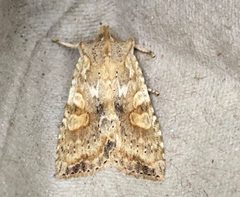
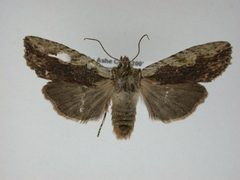
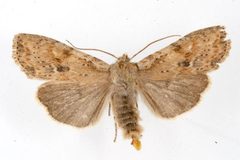
Lithophane innominata, commonly known as the Nameless Pinion, is a noctuid described by Smith in 1893. It occurs across much of North America, from the Atlantic provinces of Canada to the Pacific coast, and southward through mountain systems. The exhibits bimodal periods in spring and fall, and its larvae are on trees.
Pronunciation
How to pronounce Lithophane innominata: //ˌlɪθəˈfeɪniː ˌɪnəˈmɪnətə//
These audio files are automatically generated. While they are not always 100% accurate, they are a good starting point.
Identification
The combination of moderate size (35–39 mm wingspan), bimodal period (September–October and April–May), and broad North American distribution in wooded may help distinguish this from . Specific diagnostic characters are not provided in available sources.
Images
Appearance
Wingspan 35–39 mm. As a member of the Lithophane, likely exhibit muted, cryptic coloration typical of the group, though specific pattern details are not documented in available sources.
Habitat
Wooded areas throughout its range, including forested regions of Alberta north to Lake Athabasca, and mountainous areas extending southward from the main distribution.
Distribution
North America: Nova Scotia and New Brunswick west to Vancouver Island; south through eastern and western mountain systems; wooded parts of Alberta north to Lake Athabasca. Also recorded from Manitoba, Saskatchewan, and Vermont.
Seasonality
fly September to October and April to May, with timing varying by location. This bimodal pattern suggests a with adult or partial second depending on geographic region.
Diet
Larvae feed on a wide variety of trees.
Ecological Role
Larval polyphagy on diverse tree suggests a herbivore role in forest . are and likely serve as prey for nocturnal including bats and birds.
More Details
Bimodal Flight Period
The spring and fall periods suggest either facultative with spring , or geographic variation in voltinism that produces overlapping phenological records.