
Epiglaea apiata
(Grote, 1874)
Pointed Sallow, Cranberry blossom worm
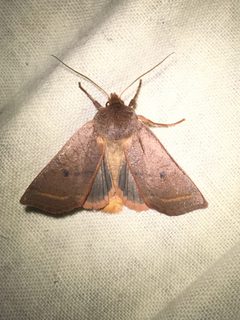
Epiglaea apiata, known as the Pointed Sallow or Cranberry blossom worm, is a noctuid native to eastern North America. The exhibits an unusual period spanning late summer through early winter, with peak activity in September and October. Larvae are specialized feeders on cranberry plants (Vaccinium subgenera Oxycoccus and Cyanococcus).
Pronunciation
How to pronounce Epiglaea apiata: //ˌɛpɪˈɡliːə æpiˈɑːtə//
These audio files are automatically generated. While they are not always 100% accurate, they are a good starting point.
Identification
Distinguished from related sallow by its specific association with cranberry and late-season period (August–March, peaking September–October). The specific epithet 'apiata' and 'Pointed Sallow' suggest pointed forewing apex, though this requires verification against similar Epiglaea .
Images
Appearance
Medium-sized noctuid with wingspan approximately 34 mm. Specific coloration and pattern details are not well documented in available sources.
Habitat
Associated with cranberry-growing regions, including bogs, wetlands, and cultivated cranberry beds. Requires presence of plants from Vaccinium subgenera Oxycoccus and Cyanococcus.
Distribution
Eastern North America: recorded from Florida, Georgia, Indiana, Louisiana, Maine, Maryland, Michigan, Minnesota, New Brunswick, North Carolina, Ohio, Quebec, South Carolina, Vermont, and Wisconsin.
Seasonality
active August through March, with majority of records in September and October. This extended winter period is unusual among noctuid .
Diet
Larvae feed on Oxycoccus and Cyanococcus (cranberry subgenera within Vaccinium). diet not documented.
Host Associations
- Vaccinium - larval food plantspecifically subgenera Oxycoccus and Cyanococcus
Ecological Role
Larval herbivore on cranberry plants; may function as a pest in cultivated cranberry operations given the 'Cranberry blossom worm'.
Human Relevance
Known as 'Cranberry blossom worm,' suggesting historical or ongoing significance as a pest in cranberry . No other documented human interactions.
Similar Taxa
- Other Epiglaea speciescongeneric with similar ; E. apiata distinguished by late-season period and cranberry association
More Details
Nomenclature
Originally described as Orthosia apiata by Grote in 1874; later transferred to Epiglaea. The specific epithet 'apiata' (Latin for '-like') may refer to appearance or , though this etymology is speculative.
Flight period anomaly
The August–March activity span, with winter records, represents an unusual for Noctuidae. This may reflect to cranberry harvest cycles or mild climate conditions in parts of its range.