
Brachylomia discinigra
(Walker, 1856)
Black-disc Sallow
Brachylomia discinigra is a noctuid first described by Francis Walker in 1856. It occurs across and temperate regions of North America, ranging from New Brunswick to British Columbia and into adjacent U.S. states. The species is and active in late summer to early fall, with a wingspan of approximately 31 mm.
Pronunciation
How to pronounce Brachylomia discinigra: /ˌbrækɪˈloʊmiə dɪˈsɪnɪɡrə/
These audio files are automatically generated. While they are not always 100% accurate, they are a good starting point.
Identification
The 'Black-disc Sallow' suggests a dark discal spot on the forewing, but specific diagnostic features for distinguishing B. discinigra from are not documented in available sources. Identification likely requires examination of genitalia or reference to regional faunas.
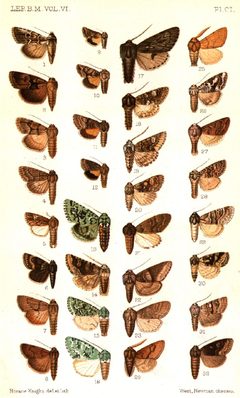
Images
Appearance
Wingspan approximately 31 mm. Specific wing pattern and coloration details are not documented in available sources.
Habitat
and temperate forest regions of North America. Specific microhabitat preferences are not documented.
Distribution
Canada: New Brunswick, Quebec, Ontario, Manitoba, Saskatchewan, Alberta, British Columbia. United States: adjacent northern states including Vermont.
Seasonality
active from late summer to early fall (August to October, depending on latitude).
Behavior
; fly during late summer and early fall.
Similar Taxa
- Brachylomia thula with overlapping North American range; specific distinguishing characters require detailed examination.
- Other Brachylomia species contains multiple similar-appearing ; accurate identification often requires genitalic dissection.
More Details
Nomenclature
Originally described as Bryophila discinigra by Walker in 1856; later transferred to Brachylomia.