
Ufeus felsensteini
Lafontaine & Walsh, 2013
Ufeus felsensteini is a small noctuid described in 2013, known exclusively from the Santa Catalina Mountains in southeastern Arizona. The exhibits unusual seasonality among temperate moths: emerge in spring and enter an state, with most activity occurring during winter months. It is one of the few species in the Ufeus, a small noctuid lineage.
Pronunciation
How to pronounce Ufeus felsensteini: /ˈjuːfiəs fɛlzənˈstaɪni/
These audio files are automatically generated. While they are not always 100% accurate, they are a good starting point.
Identification
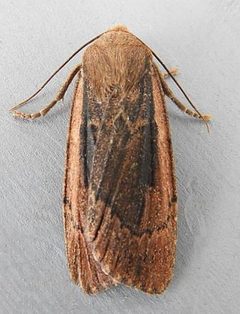
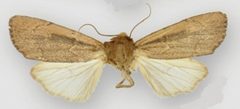
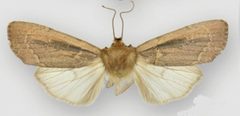
Distinguished from other Ufeus by the combination of reddish brown forewings with obscure patterning and translucent white hindwings with pearly-pink sheen. The specific geographic restriction to the Santa Catalina Mountains aids identification. Forewing length of 19–21 mm provides a size reference. The unusual winter period may help separate it from sympatric noctuids with similar coloration.
Images
Appearance
Small with forewings 19–21 mm in length. forewing reddish brown with obscure maculation; antemedial and postmedial lines slightly paler than ground color. Hindwings translucent white with slight pearly-pink sheen.
Habitat
Montane in the Santa Catalina Mountains of southeastern Arizona. Specific microhabitat requirements unknown.
Distribution
to the Santa Catalina Mountains in southeastern Arizona, United States. No other documented.
Seasonality
emerge in spring, then overwinter. Primary activity occurs during winter months.
Diet
Larvae probably feed on cottonwood (Populus ).
Host Associations
- cottonwood - probable larval feeding habit inferred from related ; not confirmed by direct observation
Behavior
overwinter after spring , with activity concentrated in winter months—an unusual pattern for temperate noctuid .
Human Relevance
Named in honor of Professor Joseph Felsenstein, who pioneered modern statistical methods in phylogenetic reconstruction.
Similar Taxa
- Other Ufeus speciesShare -level characteristics including general noctuid and wing shape; differ in forewing coloration, pattern clarity, and hindwing sheen color
- Sympatric Noctuidae with reddish brown forewingsMay resemble superficially in forewing coloration; distinguished by combination of obscure maculation, specific line patterns, and distinctive translucent white hindwings with pearly-pink sheen
More Details
Etymology
Named for Joseph Felsenstein, University of Washington professor and developer of influential phylogenetic inference software including PHYLIP.
Conservation status
Known from single location with extremely limited range; potentially vulnerable due to geographic restriction, though formal assessment not published.