
Anaplectoides
McDunnough, 1929
green arches (for A. prasina)
Species Guides
3- Anaplectoides brunneomedia(Brown-lined Dart)
- Anaplectoides prasina(Green Arches)
- Anaplectoides pressus(Dappled Dart)
Anaplectoides is a of in the Noctuidae, established by McDunnough in 1929. The genus comprises at least 13 described distributed across the Holarctic and Oriental regions. The best-known species is Anaplectoides prasina (green arches), a widespread Palearctic moth. Some species, particularly A. virens, are recognized as agricultural pests due to their herbivorous habits.
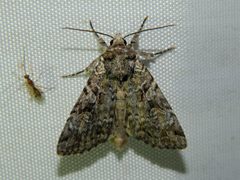
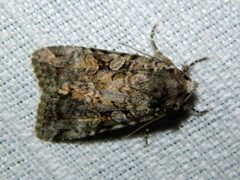
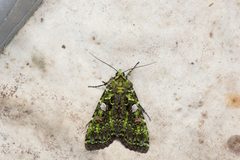
Pronunciation
How to pronounce Anaplectoides: /ˌænəplɛkˈtɔɪdiːz/
These audio files are automatically generated. While they are not always 100% accurate, they are a good starting point.
Images
Distribution
Holarctic and Oriental regions. Specific records include: Denmark, Norway, Vermont (USA), and broader North America; A. virens documented from Japan, Korea, India, and China (Tibet).
Diet
At least one , A. virens, is a herbivore feeding on a wide variety of crops. Diet for remaining species in is not documented.
Ecological Role
A. virens has been described as a destructive herbivorous pest in agricultural . Ecological roles for other in the are not documented.
Human Relevance
A. virens is considered an agricultural pest due to crop damage. A. prasina (green arches) is a familiar to European naturalists. The has been subject to phylogenetic study using mitochondrial .
More Details
Phylogenetic position
Mitochondrial analysis places A. virens at the base of Noctuinae, with the phylogenetic relationship: (A. virens + (Striacosta albicosta + (Agrotis ipsilon + Agrotis segetum))).
Species diversity
The includes 13 described : A. brunneomedia, A. colorata, A. fuscivirens, A. inexpectata, A. inouei, A. magnifica, A. perviridis, A. phaeotaenia, A. prasina, A. pressus, A. semivirens, A. tamsi, and A. virens.