
Abagrotis glenni
Buckett, 1968
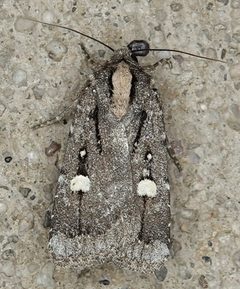
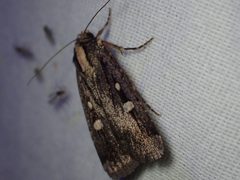
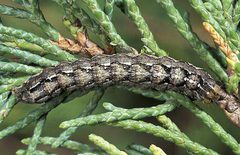
Abagrotis glenni is a noctuid described by Buckett in 1968. It occurs in western North America from British Columbia south to California and east to Utah. are active in spring, with larvae feeding on coniferous plants.
Pronunciation
How to pronounce Abagrotis glenni: /ˌæb.əˈɡroʊ.tɪs ˈɡlɛn.aɪ/
These audio files are automatically generated. While they are not always 100% accurate, they are a good starting point.
Identification
Can be distinguished from other Abagrotis by geographic range and association with western coniferous forests. fly in April–May, earlier than many related species. Larval association with Juniperus scopulorum and Thuja plicata may aid identification where these occur. Genital dissection or molecular analysis may be required for definitive identification from similar .
Images
Appearance
Wingspan approximately 33 mm. As a member of the Abagrotis, it likely exhibits the typical noctuid body plan with robust , dull coloration, and forewings that fold tent-like over the at rest. Specific markings are not documented in available sources.
Habitat
Coniferous forests of western North America, associated with Rocky Mountain juniper (Juniperus scopulorum) and western redcedar (Thuja plicata).
Distribution
Western North America: British Columbia, south through Washington and Oregon to California, and east to Utah.
Seasonality
on wing from April to May. Larval stage timing not documented.
Diet
Larvae feed on Juniperus scopulorum (Rocky Mountain juniper) and Thuja plicata (western redcedar). feeding habits unknown.
Host Associations
- Juniperus scopulorum - larval Rocky Mountain juniper
- Thuja plicata - larval western redcedar
Life Cycle
Complete with , larva, pupa, and stages. Specific details of development timing and stage not documented.
Ecological Role
Larval herbivore on coniferous trees; specific ecological impacts not documented.
Similar Taxa
- Other Abagrotis speciesCongeneric in western North America share similar and require careful examination for separation; many lack detailed biological documentation.
More Details
Taxonomic history
Described by John D. Buckett in 1968, with type locality in western North America.