
Abagrotis duanca
Smith, 1908
Dark Dart
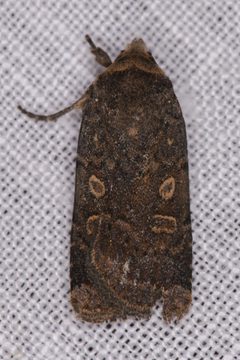
Abagrotis duanca is a noctuid first described by Smith in 1908. It occurs in the Pacific Northwest of North America, with records from Alberta's extreme southeastern corner, Saskatchewan, and surrounding regions. fly from June to July in a single . The has been reared on big sagebrush (Artemisia tridentata).
Pronunciation
How to pronounce Abagrotis duanca: /ˌæbəˈɡroʊtɪs ˈdjuːæŋkə/
These audio files are automatically generated. While they are not always 100% accurate, they are a good starting point.
Identification
Distinguished from other Abagrotis by geographic restriction to the Pacific Northwest combined with period in June-July. The specific epithet and original description by Smith (1908) provide definitive taxonomic separation. Similar sympatric Abagrotis species may require dissection or genitalia examination for reliable identification.
Images
Appearance
Habitat
Associated with big sagebrush (Artemisia tridentata) . In Alberta, restricted to the extreme southeastern corner, suggesting affinity for drier, more continental conditions at the edge of the Great Plains.
Distribution
Pacific Northwest of North America. Documented from Alberta (extreme southeastern corner), Saskatchewan, and broader Pacific Northwest region. Distribution records indicate presence in western Canada with likely extension into adjacent northwestern United States.
Seasonality
active from June to July. One per year in Alberta.
Diet
Larvae have been reared on Artemisia tridentata (big sagebrush). No other plants are documented.
Host Associations
- Artemisia tridentata - larval food plantbig sagebrush; sole documented
Life Cycle
(one per year). period June-July in Alberta. Larval development presumably occurs in late summer through following spring, though specific timing is not documented.
Ecological Role
Larval herbivore on big sagebrush. Specific ecological functions (pollination, , ) are not documented.
Human Relevance
No documented economic or agricultural significance. Of interest to lepidopterists and regional biodiversity studies.
Similar Taxa
- Other Abagrotis speciesSympatric in the Pacific Northwest share general ; reliable identification requires examination of genitalia or geographic and phenological data
More Details
Taxonomic history
Originally described as Rhynchagrotis duanca by Smith in 1908, later transferred to Abagrotis. Basionym Rhynchagrotis duanca is preserved in NCBI records.
Collection records
Alberta specimens are geographically restricted to the extreme southeastern corner, suggesting this represents a range limit rather than core .