
Hemieuxoa
McDunnough, 1929
Species Guides
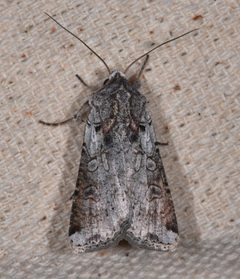
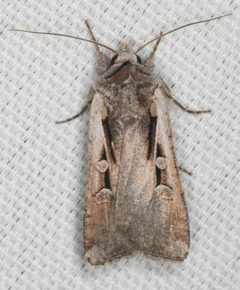
1- Hemieuxoa rudens(Creaky Dart)
Hemieuxoa is a of noctuid established by James Halliday McDunnough in 1929. The genus contains six recognized distributed primarily in North America. These moths belong to the Noctuinae, a diverse group commonly known as owlet moths. The genus name reflects a characteristic wing pattern feature, with 'hemi-' suggesting partial or half markings.
Pronunciation
How to pronounce Hemieuxoa: /ˌhɛm.iˈjuː.oʊ.ə/
These audio files are automatically generated. While they are not always 100% accurate, they are a good starting point.
Images
Distribution
North America. have been recorded across the United States and southern Canada, with individual species showing varying regional distributions.
More Details
Etymology
The name Hemieuxoa derives from Greek 'hemi-' (half) combined with the root '-euxoa', referencing the related genus Euxoa and suggesting partial or incomplete markings characteristic of some .
Taxonomic History
Originally described by Canadian entomologist James Halliday McDunnough in 1929, the was established to accommodate previously placed in other noctuid genera, particularly those with distinctive genitalic and wing pattern characteristics.
Species Diversity
The includes six described : Hemieuxoa butleri (Schaus, 1898), Hemieuxoa conchidia (Butler, 1882), Hemieuxoa interrupta (Maassen, 1890), Hemieuxoa nezia (Schaus, 1911), Hemieuxoa polymorpha (Forbes, 1933), and Hemieuxoa rudens (Harvey, 1874). Several species were transferred from other genera upon establishment of Hemieuxoa.