
Euxoa tessellata
Harris, 1841
tessellate dart, striped cutworm
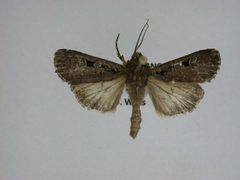
Euxoa tessellata, commonly known as the tessellate dart or striped , is a noctuid recognized as the most widespread Euxoa in North America. The moth has a wingspan of 30–38 mm and is active from June to September. Its larvae are known agricultural pests that feed on tobacco, garden crops, and the leaves of apple, cherry, and pear trees. The species forms the tessellata group with E. plagigera, with which it can hybridize in laboratory conditions, though resulting offspring are sterile.
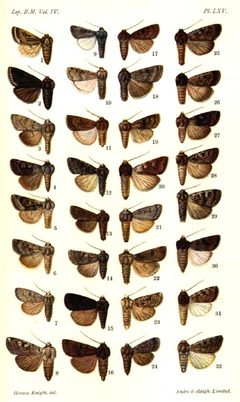
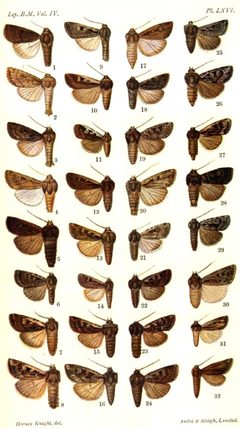
Pronunciation
How to pronounce Euxoa tessellata: /juˈksɔ.a tɛsɛˈlɑːta/
These audio files are automatically generated. While they are not always 100% accurate, they are a good starting point.
Identification
The tessellata group in North America contains two : E. tessellata and E. plagigera. These species are dissimilar in appearance but related by genital features. They can be distinguished from each other by morphological differences, though specific diagnostic characters are not detailed in available sources.
Images
Appearance
have a wingspan of 30–38 mm. Specific coloration and pattern details are not provided in available sources.
Distribution
Found from Newfoundland to Alaska. In western North America, the range extends south to California, Arizona, and New Mexico. In eastern North America, it extends south to Florida. The appears to be absent from Texas and adjacent eastern states. Distribution records include Alberta, Manitoba, and Saskatchewan in Canada, and Vermont in the United States.
Seasonality
are on wing from June to September.
Diet
Larvae feed on tobacco, various garden crops, and the leaves of apple, cherry, and pear.
Host Associations
- tobacco - larval food plant
- apple - larval food plantleaves consumed
- cherry - larval food plantleaves consumed
- pear - larval food plantleaves consumed
- various garden crops - larval food plant
Human Relevance
The larvae are agricultural pests of tobacco and various garden crops, as well as fruit trees including apple, cherry, and pear.
Similar Taxa
- Euxoa plagigeraForms the tessellata group with E. tessellata; the two are dissimilar in appearance but related by genital features and can hybridize in laboratory conditions, producing sterile offspring.
More Details
Hybridization
Euxoa tessellata and E. plagigera will hybridize in laboratory conditions, but the resulting offspring are sterile.
Sources and further reading
- BugGuide
- Wikipedia
- GBIF taxonomy match
- iNaturalist taxon
- NCBI Taxonomy
- Catalogue of Life
- Bug Eric: Winter 'pillars
- How Army Cutworm Moths Bounce Between Midwest Heat and Alpine Cool
- Out of Africa? New bamboo genera, mountain gorillas, and the origins of China’s bamboos | Blog
- Bug Eric: My Kind of Fourth of July
- Bug Eric: July 2019
- Bug Eric: March 2009