
Euxoa cinnabarina
Barnes & McDunnough, 1918
cutworm, dart moth
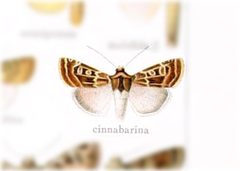
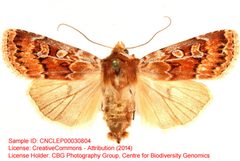
Euxoa cinnabarina is a of cutworm moth in the Noctuidae. It was first described by William Barnes and James Halliday McDunnough in 1918. The species is found in North America and is assigned the MONA/Hodges number 10797. As a member of the Euxoa, it belongs to a group of whose larvae are known as cutworms and can be agricultural pests.
Pronunciation
How to pronounce Euxoa cinnabarina: //juːkˈsoʊ.ə ˌsɪn.ə.bəˈriː.nə//
These audio files are automatically generated. While they are not always 100% accurate, they are a good starting point.
Images
Distribution
North America. The has been recorded as present in this region based on distribution records, though specific range details within North America are not documented in available sources.
Human Relevance
As a member of the Euxoa, E. cinnabarina may be of potential agricultural concern. Euxoa are known as cutworms, and their larvae can damage crops by cutting stems at or below the soil surface. However, specific documented impacts of E. cinnabarina on agriculture have not been recorded in available sources.
More Details
Taxonomic history
First described by William Barnes and James Halliday McDunnough in 1918. The name 'cinnabarina' likely refers to a cinnabar or reddish coloration, though specific coloration details are not documented in available sources.
MONA/Hodges number
10797 - a standardized numbering system for North American Lepidoptera used by the of North America project.
Sources and further reading
- BugGuide
- Wikipedia
- GBIF taxonomy match
- iNaturalist taxon
- NCBI Taxonomy
- Catalogue of Life
- Aboveground Pests - AgriLife Extension Entomology
- Stem- and Leaf- Feeding Insects - AgriLife Extension Entomology
- Bug Eric: Winter 'pillars
- How Army Cutworm Moths Bounce Between Midwest Heat and Alpine Cool
- Bug Eric: My Kind of Fourth of July
- Bug Eric: July 2019