
Agrotis gravis
Grote, 1874
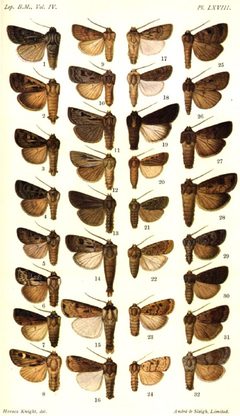
Agrotis gravis is a noctuid described by Grote in 1874. It is restricted to a highly specialized coastal , occurring exclusively on sandy ocean beaches with foreshore dunes along the Pacific coast of North America. The species has been documented from British Columbia southward through California, with 22 iNaturalist observations recorded. Its narrow and specific substrate requirements make it vulnerable to coastal habitat disturbance.
Pronunciation
How to pronounce Agrotis gravis: /əˈɡroʊtɪs ˈɡrævɪs/
These audio files are automatically generated. While they are not always 100% accurate, they are a good starting point.
Identification
No specific diagnostic features distinguishing Agrotis gravis from congeneric are documented in available sources. Identification likely requires examination of genitalic or other subtle morphological characters typical of Agrotis species discrimination.
Images
Habitat
Sandy ocean beaches, typically with foreshore dunes. The shows strict fidelity to this coastal dune .
Distribution
Pacific coast of North America, from British Columbia south to California.
Similar Taxa
- Other Agrotis speciesCongeneric in the Agrotis share general noctuid and require careful examination to distinguish; many Agrotis are cutworms with broader ranges and agricultural associations, unlike the strictly coastal A. gravis
More Details
Habitat specificity
The strict restriction to sandy ocean beaches with foreshore dunes is notable among Agrotis , most of which are or associated with agricultural and grassland .
Conservation implications
Coastal dune are subject to development pressure, recreational use, and sea level change, potentially threatening this narrowly distributed .
Sources and further reading
- BugGuide
- Wikipedia
- GBIF taxonomy match
- iNaturalist taxon
- NCBI Taxonomy
- Catalogue of Life
- Congrats to Antoine Abrieux, Innovator Fellow Award | Bug Squad
- Occasional Pests - AgriLife Extension Entomology
- Encyrtid Holdings | Entomology Research Museum
- Stem- and Leaf- Feeding Insects - AgriLife Extension Entomology
- Antoine Brieux to Share PPTM Research on Fruit Fly | Bug Squad
- Insect-resistant Maize Could Increase Yields and Decrease Pesticide Use in Mexico