
Protorthodes oviduca
(Guenée, 1852)
ruddy Quaker moth
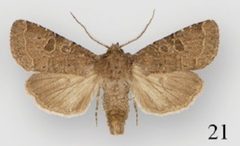
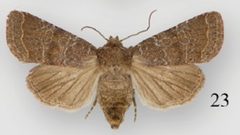
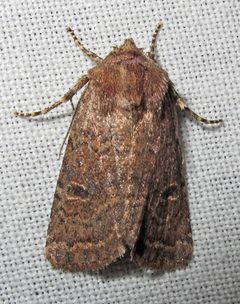
A small noctuid with reddish-brown forewings and a distinctively marked spot. fly from mid-May to early July across and temperate North America. Larvae are feeders on herbs and grasses. The shows specificity in parts of its range, occurring only in sandy areas in some regions.
Pronunciation
How to pronounce Protorthodes oviduca: //proʊˈtɔːrθoʊdiːz ˌoʊvɪˈdjuːkə//
These audio files are automatically generated. While they are not always 100% accurate, they are a good starting point.
Identification
Distinguished by the combination of small size (11–14 mm forewing length), reddish-brown ground color, and the spot which is typically completely filled with dark shading and prominently outlined in pale. These features separate it from similar Protorthodes and related noctuine .
Images
Appearance
Forewing length 11–14 mm. Ground color of forewings reddish brown. spot usually entirely filled with dark shading and outlined by contrastingly pale coloration.
Habitat
and temperate forests, woodlands, and open areas. In parts of the range (Ohio, Michigan) restricted to sandy . Found from low elevations to montane areas in the western mountains.
Distribution
Canada: Alberta, Manitoba, Saskatchewan, and eastern provinces. United States: northern tier states with extensions south to central Florida and southern Alabama in the East, and to Colorado and Utah in the western mountains.
Seasonality
on wing from mid-May to early July.
Diet
Larvae feed on various herbs and grasses.
Similar Taxa
- Protorthodes speciesSimilar size and general appearance; distinguished by forewing coloration and spot pattern of P. oviduca