Protorthodes orobia
(Harvey, 1876)
Protorthodes orobia is a noctuid described in 1876 and currently recognized as a valid . It is to eastern Texas, with highest abundance along the Gulf Coast. The species is among the smaller members of its , with distinctive forewing maculation. are active in autumn, with records limited to October.
Pronunciation
How to pronounce Protorthodes orobia: //proʊˈtɔrˌθoʊdiːz oʊˈroʊbiə//
These audio files are automatically generated. While they are not always 100% accurate, they are a good starting point.
Identification
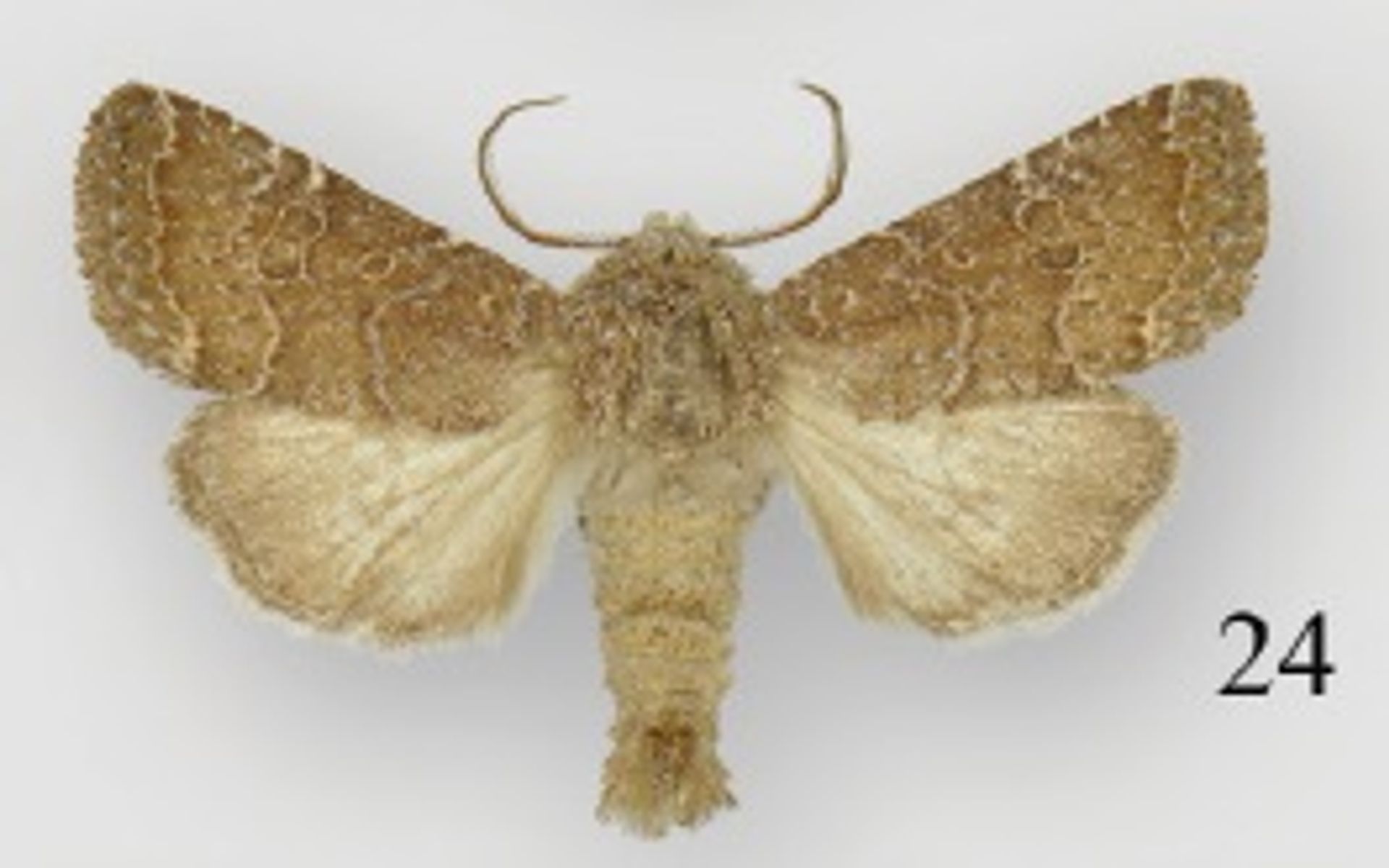
Distinguished from other Protorthodes by combination of small size (11–14 mm forewing), gray-brown ground color with white dusting, and the characteristic seven wider white spots on the representing transverse lines. The restricted Texas distribution aids identification. Similar in the region require dissection or genitalia examination for definitive separation.
Images
Appearance
Small noctuid with forewing length 11–14 mm. Forewings gray-brown ground color dusted with white . Maculation (spot pattern) defined by thin white lines. Transverse lines represented on by seven wider white spots.
Distribution
to eastern Texas, United States. Most common along the Gulf Coast. No verified records from adjacent states or Mexico.
Seasonality
active in October. Single per year inferred from limited period.
Similar Taxa
- Other Protorthodes species share general noctuid and gray-brown coloration; require genitalia dissection or detailed wing pattern analysis for separation
- Trichopolia speciesFormerly classified in this ; taxonomic revision moved this to Protorthodes, indicating historical confusion