
Protorthodes curtica
(Smith, 1890)
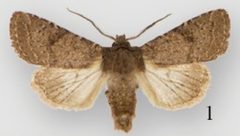
Protorthodes curtica is a small noctuid with dark reddish forewings and distinctive pale markings. It inhabits dry forested regions of western North America, primarily east of the Cascade and Coastal ranges. The has an extended period from late June through mid-October. Larvae are known to feed on herbaceous plants across several .


Pronunciation
How to pronounce Protorthodes curtica: /proʊˈtɔrθoʊˌdiːz ˈkɝtɪkə/
These audio files are automatically generated. While they are not always 100% accurate, they are a good starting point.
Identification
Distinguished by the combination of dark reddish forewing ground color and the pale, curved subterminal line that closely follows the wing margin. The even band of dark shading along the inner edge of this line and the faintly pale-outlined spot are key characters. The small size (12–16 mm forewing length) and in dry western forests help separate it from related Protorthodes .
Images
Habitat
Dry forested areas, primarily in interior regions rather than coastal environments.
Distribution
Western North America: interior southern British Columbia southward through West Coast states east of the Cascades and Coastal ranges to southern California; also in the Rocky Mountains of Idaho and Montana, and the Ruby Mountains of Nevada. Records also indicate presence in Alberta and Saskatchewan, Canada.
Seasonality
active from late June to mid-October.
Diet
Larvae feed on herbaceous plants in Asteraceae (including Ericameria ), Scrophulariaceae, and Rosaceae.
Ecological Role
Larval herbivore in dry forest ; contributes to nutrient cycling through consumption of herbaceous understory vegetation.
Similar Taxa
- Other Protorthodes speciesSimilar size and general appearance; distinguished by specific wing pattern elements (subterminal line shape, spot definition) and preferences.