
Elaphria alapallida
Pogue & Sullivan, 2003
Pale-winged Midget
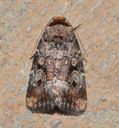
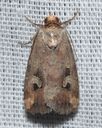
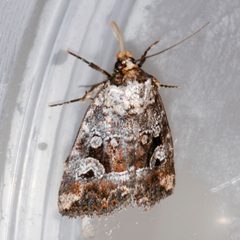
Elaphria alapallida is a small owlet moth in the Noctuidae, described in 2003 when it was split from the similar E. festivoides. It occurs across southern Canada and the northern United States. fly from May to July and are attracted to light sources.
Pronunciation
How to pronounce Elaphria alapallida: /ɛˈlæfɹiə ˌælæpəˈlɪdə/
These audio files are automatically generated. While they are not always 100% accurate, they are a good starting point.
Identification
Distinguished from the closely related Elaphria festivoides by its paler forewing coloration. The two were historically confused until Pogue and Sullivan (2003) separated them based on morphological differences. E. alapallida tends to have less contrasting wing patterns. Genitalia dissection may be required for definitive identification in some cases.
Images
Appearance
have a wingspan of 24–28 mm. The is characterized by pale forewings, which distinguishes it from the darker, more boldly patterned E. festivoides. As a member of the 'midget' group in Elaphria, it is relatively small-bodied compared to many other noctuids.
Distribution
Southern Canada (Alberta, Manitoba, Saskatchewan, and eastward) and the northern United States. Records extend to Vermont and across the northern tier of states.
Seasonality
are active from May to July. There is one per year.
Host Associations
- Acer negundo - probable larval Larvae of the related E. festivoides have been reared on this ; E. alapallida preferences may be similar but remain unconfirmed
Life Cycle
(one per year). Larval stage and details are not documented.
Behavior
are and attracted to blacklights. Has been observed at light sources in late autumn in warm conditions, though peak activity is late spring to mid-summer.
Similar Taxa
- Elaphria festivoidesHistorically confused with E. alapallida; separated in 2003. E. festivoides has darker, more contrasting forewing patterns.
- Elaphria grataAnother 'midget' in the same , similar in size and general appearance, though E. grata has distinct wing markings.
More Details
Taxonomic history
Elaphria alapallida was formally described by Pogue and Sullivan in 2003, splitting it from E. festivoides based on morphological evidence. This separation resolved long-standing identification difficulties in the E. festivoides .