
Proxenus miranda
Grote, 1873
Miranda Moth, Glistening Rustic
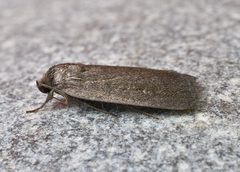
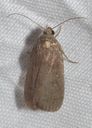
Proxenus miranda, commonly known as the Miranda or glistening rustic, is a small noctuid moth with a wingspan of 23–27 mm. It occurs across most of North America in two annually, with active from May through October. The inhabits moist, open forests and grasslands, and its larvae feed on herbaceous plants including dandelion, strawberry, and alfalfa.
Pronunciation
How to pronounce Proxenus miranda: /ˈprɒk.sɛ.nəs mɪˈræn.də/
These audio files are automatically generated. While they are not always 100% accurate, they are a good starting point.
Identification
The can be distinguished from similar Proxenus species by geographic range and period. Proxenus mindara occurs in western North America and flies earlier in the season. Definitive identification may require examination of genitalia or molecular analysis.
Images
Appearance
Small with wingspan of 23–27 mm. Specific coloration and pattern details are not documented in available sources.
Habitat
Moist, open forests and grasslands. Specific microhabitat preferences within these environments are not documented.
Distribution
Transcontinental in North America. Western range extends from southern Canada through California to Arizona, and in the Rocky Mountains to Colorado. Eastern range extends from southern Canada to South Carolina, Tennessee, and Texas.
Seasonality
active from May to October. Two per year.
Diet
Larvae feed on herbaceous plants including Taraxacum (dandelion), Fragaria (strawberry), and Medicago (alfalfa) . feeding habits are not documented.
Host Associations
- Taraxacum - larval food plant
- Fragaria - larval food plant
- Medicago - larval food plant
Life Cycle
(two per year). Specific details of , larval, and pupal stages are not documented.
Behavior
. are attracted to light. Specific behavioral details beyond activity are not documented.
Ecological Role
Larvae function as herbivores on low-growing herbaceous vegetation. The likely serves as prey for various , though specific relationships are not documented.
Human Relevance
No documented economic or agricultural significance. Occasionally attracted to artificial light sources. Recorded in citizen science observations (iNaturalist: 2,762 observations).
Similar Taxa
- Proxenus mindaraSimilar appearance; distinguished by geographic distribution (western North America) and earlier period
More Details
Taxonomic History
Described by Augustus Radcliffe Grote in 1873.
Sources and further reading
- BugGuide
- Wikipedia
- GBIF taxonomy match
- iNaturalist taxon
- NCBI Taxonomy
- Catalogue of Life
- UBI Professor Demonstrates 'How to Draw a Bug' at Bohart Museum Open House | Bug Squad
- Learn How to Write a Research Paper | Bug Squad
- Like a Moth to a Flame: Moth Night at Bohart Museum of Entomology | Bug Squad
- International Scientists at the Bohart Museum Open House | Bug Squad
- A Dragonfly to Behold: Within an Arm's Reach | Bug Squad
- Walter Leal: Special Award for Citrus Pest Research | Bug Squad