
Parapamea buffaloensis
Grote, 1877
Lizard's-tail Borer Moth
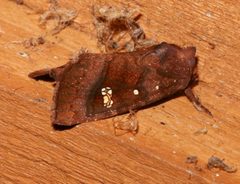
Parapamea buffaloensis, commonly known as the Lizard's-tail Borer , is a noctuid moth described by Grote in 1877. The species is native to North America and is associated with wetland where its larval plant, lizard's-tail (Saururus cernuus), occurs. The reflects its specialized relationship with this plant, as the larvae bore into the stems. are and have been documented through limited but consistent observations.
Pronunciation
How to pronounce Parapamea buffaloensis: //ˌpærəˈpiːmiə ˌbʌfəloʊˈɛnsɪs//
These audio files are automatically generated. While they are not always 100% accurate, they are a good starting point.
Images
Habitat
Associated with wetlands and marshy areas where lizard's-tail (Saururus cernuus) grows, including swamps, pond margins, and slow-moving water edges.
Distribution
North America; documented from the eastern and central United States.
Diet
Larvae bore into stems of lizard's-tail (Saururus cernuus); feeding habits unconfirmed.
Host Associations
- Saururus cernuus - larval 'lizard's-tail' gives the its vernacular name
Behavior
Larvae are stem borers; are .
Similar Taxa
- ParapameaOther in this small may overlap in range and require dissection or genitalia examination for definitive identification.
More Details
Taxonomic History
Originally described as Ochria buffaloensis by Grote in 1877 before transfer to Parapamea.
Observation Rarity
Despite specialized association, the has relatively few documented observations (67 on iNaturalist as of source date), suggesting either cryptic habits or under-surveying of wetland .