
Papaipema sciata
Bird, 1908
Culver's Root Borer Moth
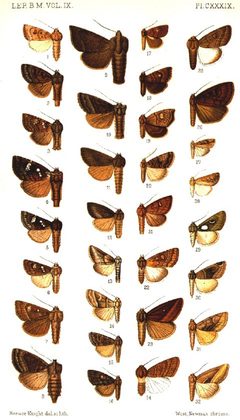
Papaipema sciata, commonly known as Culver's Root Borer , is a North American moth in the Noctuidae. The was first described by Henry Bird in 1908. It has a wingspan of approximately 40 mm. The moth is of conservation concern in some parts of its range, having been listed as a species of special concern and believed extirpated in Connecticut.
Pronunciation
How to pronounce Papaipema sciata: /pəˌpaɪˈpiːmə ˈsaɪətə/
These audio files are automatically generated. While they are not always 100% accurate, they are a good starting point.
Identification
The can be distinguished from other Papaipema species by its association with Veronicastrum virginicum as a larval , though identification to species may require expert examination.
Images
Habitat
Associated with supporting its plant Veronicastrum virginicum (Culver's root), which typically occurs in moist prairies, meadows, and woodland edges.
Distribution
Recorded from Connecticut, Maine, New York, New Jersey, Iowa, Michigan, Missouri, Minnesota, Illinois, and Wisconsin in North America. Believed extirpated in Connecticut.
Diet
Larvae feed on Veronicastrum virginicum (Culver's root), boring into the roots of this plant. diet is not documented.
Host Associations
- Veronicastrum virginicum - larval Larvae bore into the roots of this plant.
Life Cycle
Larvae are root borers, developing within the roots of their plant. Specific details regarding -laying, , and timing are not documented.
Behavior
Larvae bore into the roots of Veronicastrum virginicum. is not well documented.
Ecological Role
As a herbivore, the contributes to nutrient cycling through its root-boring activity and may influence of its plant.
Human Relevance
Listed as a of special concern in Connecticut, where it is believed extirpated. The species has no known economic impact on agriculture or forestry.
Similar Taxa
- Other Papaipema speciesThe Papaipema contains multiple root-boring that are morphologically similar and require careful identification; plant association is a key distinguishing feature for P. sciata.
More Details
Conservation Status
The is listed as a species of special concern and believed extirpated in Connecticut, indicating significant decline or loss in at least part of its historical range.
Taxonomic History
First described by Henry Bird in 1908, with relatively few subsequent studies given its apparent rarity and specialized .