
Papaipema cerina
Grote, 1874
golden borer moth
Papaipema cerina, the golden borer , is a bright yellow noctuid moth found in the Great Lakes region of North America. are active from September through mid-October. The is uncommon to rare and is associated with diverse wetland and forest . Larvae are borers that feed on lilies, May apple, and certain grass species.
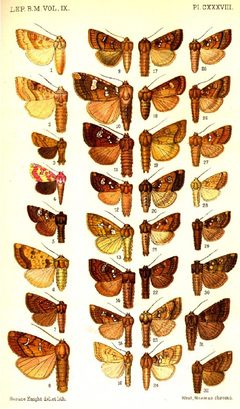
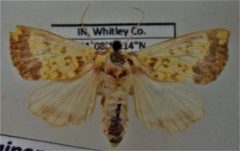
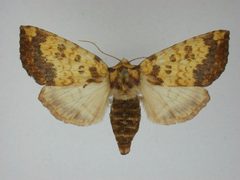
Pronunciation
How to pronounce Papaipema cerina: /ˌpæpaɪˈpɛmə ˈsɛrɪnə/
These audio files are automatically generated. While they are not always 100% accurate, they are a good starting point.
Identification
Images
Habitat
Wetlands including emergent marsh, southern wet meadow, wet prairie, wet-mesic sand prairie, and prairie fen. Also occurs in forested : southern hardwood swamp, mesic southern forest, and dry-mesic southern forest. All documented habitats share high moisture conditions.
Distribution
Great Lakes region of North America. Recorded from Indiana, Michigan, Illinois, Maine, Ohio, Wisconsin, Iowa, and Ontario. GBIF records also indicate presence in Manitoba and Saskatchewan.
Seasonality
on wing from September through mid-October. Single annually.
Diet
Larvae feed internally as borers in shoots or roots of plants. Documented hosts include lilies (Lilium), May apple (Podophyllum), bottlebrush grass (Hystrix patula), and dark green bullrush (Scirpus atrovirens). Larvae typically begin in grasses then switch to Lilium and related plants.
Host Associations
- Lilium - larval food plantLarvae bore into shoots or roots
- Podophyllum - larval food plantMay apple; larvae bore into shoots or roots
- Hystrix patula - larval food plantBottlebrush grass; early instar
- Scirpus atrovirens - larval food plantDark green bullrush
Life Cycle
Complete with one annually. Larvae bore into plant shoots or roots. likely occurs in soil or within host plant remains, though specific details are not documented. emerge in autumn.
Behavior
are . Larvae are internal feeders, boring into plant tissues rather than feeding externally.
Ecological Role
As a borer, larvae create tunnels in native lilies and related plants, potentially affecting plant vigor. densities appear low due to uncommon to rare status. Role in is not documented.
Human Relevance
No documented economic importance. Uncommon to rare status may indicate sensitivity to disturbance. Potential for intact wetland and mesic forest in the Great Lakes region.
Similar Taxa
- Other Papaipema speciesMost are brown or gray rather than bright yellow; P. cerina's coloration is distinctive within the
- Other yellow NoctuidaeSeptember-October period and wetland/forest association help distinguish from with different or habitat preferences
More Details
Conservation Status
Uncommon to rare throughout its range. specificity and limited distribution may contribute to this status.
Taxonomic History
Originally described as Gortyna cerina by Grote in 1874, later transferred to Papaipema.