
Schinia septentrionalis
Walker, 1858
Northern Flower Moth
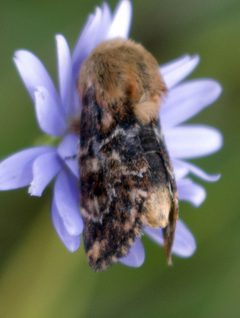
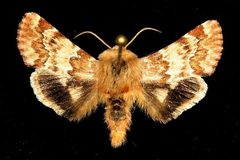
Schinia septentrionalis, the Northern Flower , is a small noctuid moth described by Francis Walker in 1858. It is distributed across eastern and central North America, with a single per year. The is listed as threatened in Connecticut.
Pronunciation
How to pronounce Schinia septentrionalis: /ˈskɪniə sɛptɛnˈtrioʊnælɪs/
These audio files are automatically generated. While they are not always 100% accurate, they are a good starting point.
Identification
The wingspan of about 25 mm distinguishes it from larger Schinia . Specific wing pattern details are not documented in available sources.
Images
Habitat
Associated with supporting plants in the Symphyotrichum. Specific habitat types are not documented beyond this host association.
Distribution
North America from Missouri to Quebec to South Carolina and Louisiana. Documented records include Colorado, Oklahoma, South Dakota, and Texas.
Seasonality
One per year. Specific period timing is not documented in available sources.
Diet
Larvae feed on various asters, specifically Symphyotrichum laeve and Symphyotrichum oblongifolium. feeding habits are not documented.
Host Associations
- Symphyotrichum laeve - larval
- Symphyotrichum oblongifolium - larval
Life Cycle
One per year. Specific details of developmental stages or strategy are not documented.
Human Relevance
Listed as threatened in the US state of Connecticut.
More Details
Conservation Status
The is listed as threatened in Connecticut, indicating regional conservation concern.
Taxonomic History
Originally described as Omia septentrionalis by Walker in 1858 before transfer to Schinia.