
Schinia oleagina
Morrison, 1875
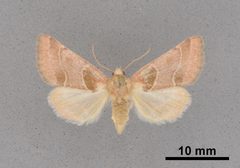
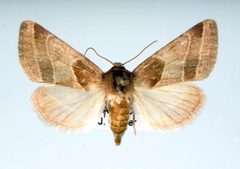
Schinia oleagina is a noctuid described by Morrison in 1875. It occurs across much of western North America and has a wingspan of approximately 27 mm. The is notable for its specialized larval association with Brickellia, a of flowering plants in the aster . Like other members of the genus Schinia, are often found resting on or near their plants.
Pronunciation
How to pronounce Schinia oleagina: //ˈskiːniə oʊliˈædʒɪnə//
These audio files are automatically generated. While they are not always 100% accurate, they are a good starting point.
Identification
Members of the Schinia are recognized by their often bright and contrasting wing coloration, which frequently matches the flowers of their plants. Schinia oleagina can be distinguished from similar Schinia by its western North American distribution and association with Brickellia host plants. Precise identification may require examination of genitalia or reference to specialized identification resources.
Images
Appearance
have a wingspan of about 27 mm. As a member of the Schinia, adults typically display colorful wing patterns that often serve as camouflage against flowers. Specific coloration details for this are not well documented in available sources.
Habitat
Associated with where Brickellia, the larval plant, occurs. This includes various open, dry to mesic environments in western North America where this plant is present.
Distribution
Found in most of the western half of North America.
Diet
Larvae feed on Brickellia. feeding habits are not documented in available sources.
Host Associations
- Brickellia - larval Larval food plant
Behavior
are likely or given the habits of related Schinia , though specific behavioral observations for this species are not documented. Larvae feed on flowers and seed of their plant.
Ecological Role
As a herbivore on Brickellia, the participates in plant-insect interactions in its native range. Its precise role in pollination or as prey for other organisms is not documented.
Human Relevance
The has been documented through citizen science platforms such as iNaturalist and is occasionally encountered by lepidopterists. It is not known to be of economic importance.
Similar Taxa
- Other Schinia speciesShare similar body plan, wing pattern style, and flower-associated habits. Distinguished by plant associations and geographic distribution.
More Details
Taxonomic history
Described by Morrison in 1875. The has been placed in the Heliothinae within Noctuidae.
Observation records
As of available data, there are 86 observation records on iNaturalist, indicating it is documented but not commonly encountered.
Sources and further reading
- BugGuide
- Wikipedia
- GBIF taxonomy match
- iNaturalist taxon
- NCBI Taxonomy
- Catalogue of Life
- Catch a Glimpse of Caterpillars During National Moth Week
- Bug Eric: Wasp Wednesday: Not Wasp VIII
- Bug Eric: White Prairie Clover: An Awesome Blossom
- Bug Eric: Remembering National Moth Week 2018
- Bug Eric: October 2018
- 2013 Oklahoma Collecting Trip iReport | Beetles In The Bush