
Schinia intrabilis
Smith, 1893
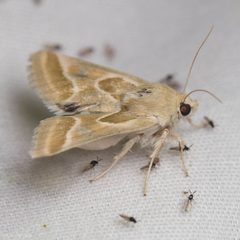
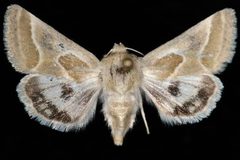
Schinia intrabilis is a small noctuid native to the southwestern United States. are active in early spring, with a single per year. The has a wingspan of approximately 23 mm. Larvae are specialized feeders on Pluchea sericea, a shrub in the aster .
Pronunciation
How to pronounce Schinia intrabilis: //ˈskɪniə ɪnˈtræbɪlɪs//
These audio files are automatically generated. While they are not always 100% accurate, they are a good starting point.
Identification
Distinguished from other Schinia by geographic distribution in the southwestern U.S. and early spring period (March–April). Specific diagnostic features for field identification not documented. Similar to other small heliothine noctuids; genitalia examination may be required for definitive identification.
Images
Appearance
Small with wingspan approximately 23 mm. consistent with Schinia: compact body, relatively broad wings. Specific coloration and pattern details not documented in available sources.
Habitat
Associated with supporting its larval plant Pluchea sericea (arrowweed), which typically occurs in riparian areas, washes, and moist alkaline soils in desert and semi-arid regions.
Distribution
Southwestern United States: California, Arizona, Nevada, Texas, and Utah.
Seasonality
active March to April. One per year ().
Diet
Larvae feed on Pluchea sericea (Asteraceae). feeding habits not documented.
Host Associations
- Pluchea sericea - larval arrowweed; larvae feed on flowers and seed pods
Life Cycle
Complete . One per year with emerging in early spring. Larval development occurs on plant; details not documented.
Ecological Role
Herbivore as larva; likely as given flower-visiting observed in related Schinia . Specific ecological role not documented.
Similar Taxa
- Other Schinia speciesMany Schinia are small, colorful noctuids with similar ; S. intrabilis distinguished by range and
- Small heliothine noctuids in southwestern U.S.Similar size and general appearance; require genitalia examination for definitive identification
Sources and further reading
- BugGuide
- Wikipedia
- GBIF taxonomy match
- iNaturalist taxon
- NCBI Taxonomy
- Catalogue of Life
- Bug Eric: Wasp Wednesday: Not Wasp VIII
- Catch a Glimpse of Caterpillars During National Moth Week
- Bug Eric: White Prairie Clover: An Awesome Blossom
- Bug Eric: Remembering National Moth Week 2018
- Bug Eric: October 2018
- 2013 Oklahoma Collecting Trip iReport | Beetles In The Bush