
Schinia deserticola
Barnes & McDunnough, 1916
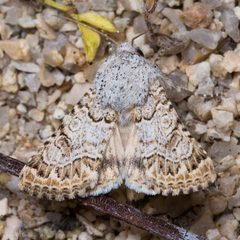
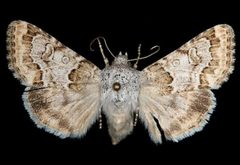
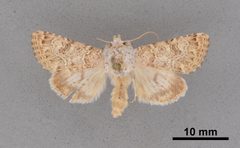
A small noctuid of western North American deserts, formerly treated as a of Schinia cupes. have a wingspan of 22–28 mm. The is closely tied to its larval plant Camissonia claviformis, with adults typically found resting on or near the flowers.
Pronunciation
How to pronounce Schinia deserticola: /ˈskiː.ni.ə dɛˌzɛr.tɪˈkoʊ.lə/
These audio files are automatically generated. While they are not always 100% accurate, they are a good starting point.
Identification
Distinguished from the closely related Schinia cupes by geographic range and elevation; formerly considered . are small (wingspan 22–28 mm) and associated with Camissonia claviformis flowers. Accurate identification may require examination of genitalia or reference to original description.
Images
Habitat
Desert and arid shrubland environments where the plant Camissonia claviformis occurs.
Distribution
Western North America: southern California to southeastern Arizona, north to west-central Utah and southeastern Oregon.
Diet
Larvae feed on Camissonia claviformis (evening primrose ). feeding habits are not documented.
Host Associations
- Camissonia claviformis - larval Larvae feed on this plant; are found in association with it.
Life Cycle
Complete with , larva, pupa, and stages. Larvae are known to feed on Camissonia claviformis.
Behavior
have been observed resting on flowers of the plant. activity is likely given characteristics, though specific behavioral observations are limited.
Ecological Role
of Camissonia claviformis through flower visitation; herbivore as larva.
Similar Taxa
- Schinia cupesFormerly treated as a ; now recognized as distinct based on geographic and morphological differences.
More Details
Taxonomic History
Elevated from status under Schinia cupes to full status based on subsequent systematic study.
Sources and further reading
- BugGuide
- Wikipedia
- GBIF taxonomy match
- iNaturalist taxon
- NCBI Taxonomy
- Catalogue of Life
- Bembicid Holdings | Entomology Research Museum
- Meloidae Holdings | Entomology Research Museum
- Bug Eric: Wasp Wednesday: Not Wasp VIII
- Catch a Glimpse of Caterpillars During National Moth Week
- Bug Eric: White Prairie Clover: An Awesome Blossom
- Bug Eric: Remembering National Moth Week 2018