
Schinia coercita
Grote, 1881
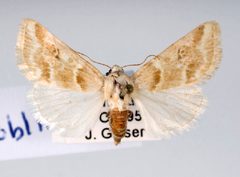
Schinia coercita is a noctuid described by Grote in 1881. It is a member of the flower moth Schinia, which contains over 120 in North America. The species has been documented in the southwestern United States, specifically Arizona and California. Like other Schinia species, are likely associated with plant flowers for feeding and oviposition.
Pronunciation
How to pronounce Schinia coercita: //ˈskɪniə koʊˈɜrtʃɪtə//
These audio files are automatically generated. While they are not always 100% accurate, they are a good starting point.
Identification
Distinguished from other Schinia by genitalia examination and geographic distribution. The Schinia contains at least 123 North American species, many with similar flower-associated habits. Identification to species level typically requires reference to specialized taxonomic keys or dissection.
Images
Appearance
Wingspan approximately 23 mm. Specific coloration and pattern details are not documented in available sources.
Habitat
Specific details are not documented. Based on documented distribution in Arizona and California, the likely inhabits arid and semi-arid regions of the southwestern United States.
Distribution
Documented from Arizona and California in the southwestern United States. GBIF records indicate presence in North America broadly.
Behavior
of Schinia are often and visit flowers for nectar. Some species rest on plant flowers where their coloration provides camouflage. Whether S. coercita exhibits these specifically has not been documented.
Ecological Role
As a member of the flower moth Schinia, likely contributes to pollination of plants and serves as prey for .
Human Relevance
No documented economic or cultural significance. The is popular with lepidopterists, as evidenced by specialized collecting interest (e.g., license plate reference to 'Schinia' genus in Oklahoma collecting trip account).
Similar Taxa
- Other Schinia speciesOver 123 in North America share similar flower-associated habits and often resemble each other in general appearance. Many require genitalia examination for definitive identification.
More Details
Taxonomic History
Originally described as Lygranthoecia coercita by Grote in 1881, later transferred to Schinia.
Sources and further reading
- BugGuide
- Wikipedia
- GBIF taxonomy match
- iNaturalist taxon
- NCBI Taxonomy
- Catalogue of Life
- Bug Eric: Wasp Wednesday: Not Wasp VIII
- Catch a Glimpse of Caterpillars During National Moth Week
- Bug Eric: White Prairie Clover: An Awesome Blossom
- Bug Eric: Remembering National Moth Week 2018
- Bug Eric: October 2018
- 2013 Oklahoma Collecting Trip iReport | Beetles In The Bush