
Schinia ciliata
Smith, 1900
Snakeweed Flower Moth
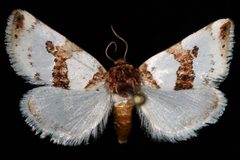
Schinia ciliata, commonly known as the Snakeweed Flower , is a small noctuid moth in the Heliothinae. It is distributed across the southwestern and south-central United States. The has a wingspan of approximately 22 mm and is closely associated with its larval plant, Gutierrezia sarothrae. are and often found resting on or near flowers of their host plant.
Pronunciation
How to pronounce Schinia ciliata: /ˈskɪniə sɪliˈɑːtə/
These audio files are automatically generated. While they are not always 100% accurate, they are a good starting point.
Identification
Distinguished from similar Schinia by geographic range and association with Gutierrezia sarothrae plant. Specific diagnostic morphological features not documented in available sources. may be confused with other small, flower-associated noctuids but can be identified by host plant specificity and confirmed by genital dissection or .
Images
Appearance
Small with wingspan of approximately 22 mm. Specific coloration and pattern details not documented in available sources. As with many Schinia , likely exhibit coloration that provides camouflage against their plant flowers.
Habitat
Arid and semi-arid regions where the larval plant Gutierrezia sarothrae (snakeweed, broom snakeweed) occurs. include grasslands, sagebrush steppe, and open dry slopes in the southwestern United States.
Distribution
Native to southwestern and south-central North America. Documented from southern California eastward through Utah, Arizona, Colorado, New Mexico, western Kansas and Oklahoma, with scattered records throughout Texas.
Diet
Larvae are herbivores feeding on Gutierrezia sarothrae. feeding habits not documented in available sources.
Host Associations
- Gutierrezia sarothrae - larval plantLarvae feed on flowers and seed pods
Life Cycle
Complete with , larva, pupa, and stages. Larvae feed on flowers and later seed pods of the plant. Specific details of site, number of per year, and stage not documented in available sources.
Behavior
are , visiting flowers for nectar or seeking plants for oviposition. This daytime activity pattern is characteristic of many Schinia .
Ecological Role
As a herbivore, larvae contribute to seed and nutrient cycling on their plant. may serve as when visiting flowers for nectar. Specific ecological impacts not quantified in available sources.
Human Relevance
No documented economic importance. The is not known to be a pest of agriculture or forestry. Observations contribute to biodiversity documentation in arid western .
Similar Taxa
- Other Schinia speciesMany Schinia share similar small size, , and flower-associated habits. Accurate identification requires examination of genitalia or plant association.
- Small Heliothinae mothsMembers of the same share general body plan and size range, requiring careful examination for -level identification.
More Details
Taxonomic Note
Schinia ciliata was described by Smith in 1900. The Schinia contains over 100 in North America, many of which are poorly known and difficult to identify without specialized examination.
Conservation Status
Not evaluated by IUCN. The appears to have a broad distribution within its arid range, though trends are not monitored.
Sources and further reading
- BugGuide
- Wikipedia
- GBIF taxonomy match
- iNaturalist taxon
- NCBI Taxonomy
- Catalogue of Life
- Citizen Scientists Invited to Join the Seed Pile Project | Bug Squad
- The Big 43: The California Native Plants, Plus One, Studied in UC Davis Research | Bug Squad
- Lace bugs help put the “sick” in sycamore: Sycamore lace bug, Corythucha ciliata — Bug of the Week
- Mosquito Management in the Era of Extreme Weather
- Harpoon Heads, Sweeping Tails: How Predatory Mosquito Larvae Capture Prey
- Bug Eric: Wasp Wednesday: Not Wasp VIII