
Schinia argentifascia
Barnes & McDunnough, 1912
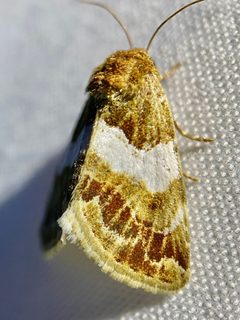
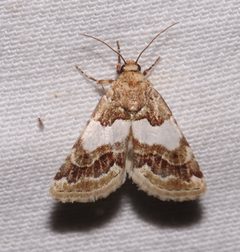
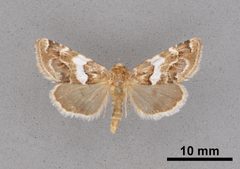
Schinia argentifascia is a small in the Noctuidae, described by Barnes & McDunnough in 1912. It is known from arid regions of the southwestern United States and adjacent Mexico. The is associated with Ericameria (rabbitbrush) as a larval . Like other members of the Schinia, likely rest on or near their host plant flowers.
Pronunciation
How to pronounce Schinia argentifascia: /ˈʃɪniə ˌɑrˌdʒɛntɪˈfæskjə/
These audio files are automatically generated. While they are not always 100% accurate, they are a good starting point.
Identification
The specific epithet suggests a silver band on the forewing, which may distinguish it from congeneric . Definitive identification requires examination of genitalia or reference to original description. Similar to other small Heliothinae in the Schinia; separation from related species depends on pattern details and geographic occurrence.
Images
Habitat
Arid and semi-arid regions of the southwestern United States; associated with supporting Ericameria .
Distribution
Documented from Arizona, California, Baja California, Nevada, New Mexico, Texas, and Utah. Distribution corresponds to the range of its larval plant Ericameria in the southwestern United States and northwestern Mexico.
Seasonality
period not explicitly documented; likely corresponds to blooming period of Ericameria plants, which typically flower late summer to fall.
Diet
Larvae feed on Ericameria (rabbitbrush). feeding habits not documented.
Host Associations
- Ericameria - larval Larvae feed on in this ; specific species not documented.
Life Cycle
Complete with , larva, pupa, and stages. Larvae are flower/seed feeders on Ericameria. Specific details of site and number of per year not documented.
Behavior
likely or ; may be attracted to light. Resting posture and specific not documented.
Ecological Role
Larval herbivore on Ericameria; potential as . Specific ecological interactions not documented.
Human Relevance
No documented economic importance. Of interest to lepidopterists and collectors, as indicated by specialized license plate reference in field account.
Similar Taxa
- Other Schinia species contains over 100 North American , many with similar size and habits; distinguished by wing pattern details, associations, and geographic range.
More Details
Taxonomic Note
Placed in Heliothinae (formerly often treated as Heliothidae). The Schinia is known for with highly specific plant associations, often feeding on flowers and seeds of Asteraceae.
Sources and further reading
- BugGuide
- Wikipedia
- GBIF taxonomy match
- iNaturalist taxon
- NCBI Taxonomy
- Catalogue of Life
- Bug Eric: Wasp Wednesday: Not Wasp VIII
- Catch a Glimpse of Caterpillars During National Moth Week
- Bug Eric: White Prairie Clover: An Awesome Blossom
- Bug Eric: Remembering National Moth Week 2018
- Bug Eric: October 2018
- 2013 Oklahoma Collecting Trip iReport | Beetles In The Bush