
Heliothodes diminutiva
Grote, 1873
Small Heliothodes Moth
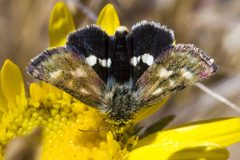
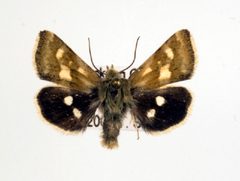
Heliothodes diminutiva is a small owlet moth in the Noctuidae, native to western North America. The is a herbivore whose larvae feed on the reproductive structures of tarweed (Madia elegans), a sticky plant in the Asteraceae family. females lay on developing flower buds, and emerging caterpillars can consume all flowers and buds, potentially sterilizing plants. This species has been extensively studied in the context of plant indirect defense mechanisms, where trapped insect carrion on sticky plants attracts that reduce herbivory.
Pronunciation
How to pronounce Heliothodes diminutiva: //ˌhɛliˈoʊˌθoʊdiːz dɪˌmɪnjuˈtaɪvə//
These audio files are automatically generated. While they are not always 100% accurate, they are a good starting point.
Images
Habitat
Associated with tarweed (Madia elegans) in open, dry . The plant is an flowering plant native to California that produces resinous, oily or hooked trichomes (sticky hairs) on its surfaces.
Distribution
Western North America: California, Oregon, and Washington.
Seasonality
and oviposition coincide with tarweed flowering period, approximately June through September. Larval activity occurs during mid to late summer.
Diet
Larvae feed almost exclusively on the reproductive organs (flowers and developing buds) of tarweed (Madia elegans). They do not consume vegetative plant tissue to a significant degree.
Host Associations
- Madia elegans - primary herbivore; larvae feed on flowers and buds, can completely sterilize plants
Life Cycle
lay on developing flower buds of the plant. Larvae emerge and feed on reproductive structures. The speed of larval development allows caterpillars to rapidly consume all flowers and buds on a plant. Specific details and stage are not documented in available sources.
Behavior
females oviposit selectively on developing buds rather than vegetative tissue. Larvae exhibit rapid, intensive feeding on reproductive structures that can eliminate all reproductive potential of individual plants.
Ecological Role
lepidopteran herbivore in tarweed systems. Serves as a model organism for studying plant indirect defense: its herbivory pressure is reduced when sticky plants trap insect carrion that attracts predatory arthropods. The 60% reduction in bud damage observed in experimental conditions demonstrates top-down control mediated by plant-provided resources.
Human Relevance
Subject of ecological research on plant indirect defense mechanisms and dynamics. No documented agricultural or economic significance.
Similar Taxa
- HeliothodesOther in likely share similar and associations within Heliothinae, but H. diminutiva is specifically documented as the tarweed in California systems
More Details
Research significance
This was central to the first demonstration that non- plants can enhance indirect defense by trapping environmental insect carrion ('tourist trap' hypothesis), attracting that reduce herbivore damage