
Heliocheilus lupatus
(Grote, 1875)
Spotted Straw Moth, Lupatus Straw Moth, Purple Topper
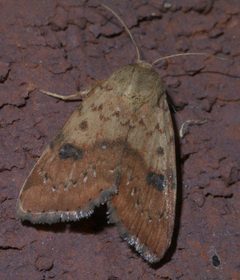
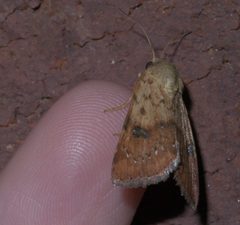
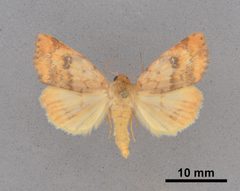
Heliocheilus lupatus is a small noctuid native to the eastern and southeastern United States. have a wingspan of approximately 28 mm. The was first described by Augustus Radcliffe Grote in 1875 and was formerly treated as a synonym of Heliocheilus turbata. Larvae are grass-feeders, and adults have one per year.
Pronunciation
How to pronounce Heliocheilus lupatus: //ˌhiːliːoʊˈkaɪləs luːˈpeɪtəs//
These audio files are automatically generated. While they are not always 100% accurate, they are a good starting point.
Identification
Distinguished from the closely related Heliocheilus turbata by genitalic characters; historically confused with that . Small size (28 mm wingspan) and spotted forewing pattern separate it from larger noctuids. Examination of male genitalia or may be required for definitive identification where ranges overlap with similar Heliocheilus species.
Images
Appearance
Small with wingspan approximately 28 mm. Forewings display a pattern of spots and striations typical of Heliocheilus . The 'Purple Topper' suggests distinctive coloration on the or , though specific markings require specimen examination.
Habitat
Associated with grassland , including prairies, meadows, pastures, and open fields where larval grasses occur. likely found in disturbed grassy areas and edges of agricultural fields.
Distribution
Eastern and southeastern United States: from central Connecticut and Kentucky south through Georgia, North Carolina, and South Carolina to Florida and Texas.
Seasonality
One per year (). activity period not precisely documented in sources but likely corresponds to warm season months given southern distribution.
Diet
Larvae feed on various grasses (Poaceae). feeding habits not documented.
Host Associations
- Poaceae - larval various grass
Life Cycle
One per year. Complete with , larval, pupal, and stages. Larval stage feeds on grasses; likely occurs in soil or leaf litter. Specific timing of life stages not documented.
Ecological Role
Larval stage functions as a primary consumer of grasses. Role in as prey for birds, , and other not quantified. Not documented as a significant pest of turf or forage grasses.
Human Relevance
No documented economic importance. Of interest to lepidopterists and naturalists. Former taxonomic confusion with Heliocheilus turbata complicated identification in historical collections.
Similar Taxa
- Heliocheilus turbataFormerly considered ; requires genitalic examination or molecular analysis for separation. Historical misidentifications common.
Misconceptions
Formerly treated as a synonym of Heliocheilus turbata; recent work recognizes both as valid . 'Purple Topper' may cause confusion with unrelated species.
More Details
Taxonomic History
Originally described as Heliothis lupatus by Grote in 1875. Transferred to Heliocheilus. Long treated as a synonym of Heliocheilus turbata before revalidation as a distinct .