
Maliattha synochitis
Grote & Robinson, 1868
Black-dotted Glyph, black-dotted maliattha, black-dotted lithacodia
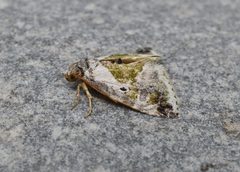
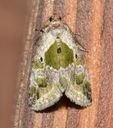
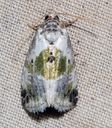
Maliattha synochitis is a small owlet moth in the Noctuidae, commonly known as the Black-dotted Glyph. The was described in 1868 and is found across North America. It is frequently attracted to blacklights, making it a common subject for enthusiasts and citizen science projects.
Pronunciation
How to pronounce Maliattha synochitis: /məˈliːəθə sɪˈnɒkɪtɪs/
These audio files are automatically generated. While they are not always 100% accurate, they are a good starting point.
Identification
The Black-dotted Glyph can be recognized as a member of the Maliattha, which comprises small noctuid . Specific diagnostic features for distinguishing M. synochitis from are not documented in the provided sources. The is assigned MONA/Hodges number 9049 for North American moth identification.
Images
Habitat
The has been observed in residential yards and landscapes, suggesting adaptability to human-modified environments. Specific preferences are not documented.
Distribution
Documented from North America, with specific records from Alberta, Manitoba, and Saskatchewan in Canada, and Vermont in the United States. The appears to have a broad continental distribution.
Seasonality
Activity period not explicitly documented, though the has been recorded during summer months (May–August) in blacklight surveys.
Behavior
Strongly attracted to artificial light sources, particularly blacklights. This makes it readily detectable during surveys and citizen science events like National Moth Week.
Human Relevance
The contributes to citizen science datasets through platforms like iNaturalist, where it has accumulated over 10,000 observations. It serves as an accessible subject for amateur identification and biodiversity documentation in residential settings.
Similar Taxa
- Other Maliattha species share small size and noctuid , requiring examination of genitalia or detailed wing pattern analysis for definitive identification.
More Details
Taxonomic history
Originally described as Erastria synochitis by Grote and Robinson in 1868, later transferred to Maliattha.
Data availability
With over 10,000 iNaturalist observations, this represents one of the more frequently documented small noctuids in North America, though specific biological details remain sparse in scientific literature.