
Cucullia alfarata
Strecker, 1898
Camphorweed Owlet, camphorweed cucullia
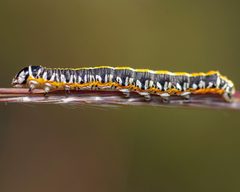
Cucullia alfarata is a noctuid found in North America. The 'Camphorweed Owlet' references its association with camphorweed (Heterotheca subaxillaris), a known plant for larvae of this . are and attracted to light. The species belongs to the Cuculliinae, a group whose larvae typically feed on the flowers and seeds of Asteraceae.
Pronunciation
How to pronounce Cucullia alfarata: //kʊˈkʊliə ælˈfærɑtə//
These audio files are automatically generated. While they are not always 100% accurate, they are a good starting point.
Identification
Distinguished from other Cucullia by geographic range and plant association. C. alfarata occurs in eastern and central North America, overlapping with several . Accurate identification typically requires examination of genitalia or molecular analysis. The species is most reliably identified by association with its host plant, camphorweed (Heterotheca subaxillaris), and by geographic provenance within its documented range.
Images
Habitat
Open, sunny where camphorweed (Heterotheca subaxillaris) grows, including prairies, meadows, roadsides, and disturbed areas. The is tied to the distribution of its larval plant.
Distribution
North America, primarily in the eastern and central United States. Records span from the Atlantic coast westward through the Great Plains. The has been documented in jug traps baited with sweet red wine and ethanol mixtures in Oklahoma, suggesting presence in the south-central U.S.
Seasonality
are active from late spring through summer, with peak activity in June and July. Larvae feed on plant flowers during summer. Pupae overwinter in soil.
Diet
Larvae feed on flowers and developing seeds of camphorweed (Heterotheca subaxillaris), an asteraceous plant. feeding habits are not documented but are presumed to include nectar and other liquid sources.
Host Associations
- Heterotheca subaxillaris - larval Camphorweed; larvae feed on flowers and seeds
Life Cycle
Complete with one per year (). laid on plant flowers. Larvae feed on flowers and developing seeds through summer. occurs in soil, with emerging the following spring.
Behavior
are and attracted to artificial light sources. They have been collected in jug traps baited with sweet red wine and ethanol mixtures. Larvae are concealed feeders within plant flower .
Ecological Role
Larval herbivore on Asteraceae, specializing on a single . Serves as prey for and . may contribute to pollination while nectaring.
Human Relevance
Minor economic significance. The is of interest to lepidopterists and naturalists. No known agricultural or forestry impacts. Used as an for prairie and open conservation.
Similar Taxa
- Cucullia convexipennisOverlapping range and similar plant use on Asteraceae; distinguished by subtle differences in wing pattern and genitalia
- Cucullia asteroidesSimilar size and general appearance; C. asteroides typically feeds on different asteraceous and shows different geographic distribution
- Cucullia dorsalisWestern with similar ; distribution helps distinguish, though some range overlap may occur
More Details
Collection method
Documented in jug traps baited with sweet red wine (SRW) and 50:50 SRW/ethanol mixtures in Oklahoma panhandle, indicating attraction to fermenting fruit volatiles.
Taxonomic history
Described by Strecker in 1898. The specific epithet 'alfarata' etymology is not documented in available sources.