
Diastema
Guenée, 1852
Species Guides
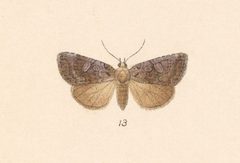
5Diastema is a of in the Noctuidae, Condicinae. The genus was erected by Achille Guenée in 1852. These moths are part of the diverse owlet moth fauna, with distributed across various regions. The genus name Diastema is derived from Greek, meaning 'space' or 'interval', though the biological significance of this naming in reference to moth is not documented in available sources.


Pronunciation
How to pronounce Diastema: /daɪəˈstiːmə/
These audio files are automatically generated. While they are not always 100% accurate, they are a good starting point.
Images
Misconceptions
The name 'Diastema' is widely used in dental and medical contexts to describe a gap between teeth, which has no relation to this . Additionally, 'Diastema' is a genus of flowering plants in the Gesneriaceae (authority Bentham, 1844), creating potential taxonomic confusion. The moth genus Diastema (Guenée, 1852) is distinct from both the dental term and the plant genus.
More Details
Taxonomic homonymy
The name Diastema is used for three completely different entities: (1) this genus in Noctuidae (Guenée, 1852), (2) a plant genus in Gesneriaceae (Bentham, 1844), and (3) a dental/medical term for tooth spacing. These are unrelated and should not be conflated in biological databases or literature searches.
Available data limitations
Despite 1,350 observations recorded on iNaturalist, published biological information about Diastema —covering larval , precise distribution, seasonal activity, and diagnostic —remains sparse in accessible scientific literature. Most species-level accounts are contained in original taxonomic descriptions and regional faunal works not summarized here.
Sources and further reading
- BugGuide
- Wikipedia
- iNaturalist taxon
- NCBI Taxonomy
- Catalogue of Life
- Epidemiology of open and closed diastemata in equine cheek teeth and associations with periodontal pathology.
- Impact of different levels of diastema and crowding on the precision of 3D-printed dental models: a comparative analysis using digital superimposition.
- Matrix-Guided Composite Resin for Direct Diastema Closure: A Clinical Technique Report.