
Condica punctifera
(Walker, 1856)
Condica punctifera is a small noctuid with a wingspan of approximately 27 mm. First described by Francis Walker in 1856, this has a restricted Caribbean distribution, occurring in southern Florida and on several islands of the Greater Antilles. It belongs to the Condicinae, a group of generally small, often poorly studied owlet moths.
Pronunciation
How to pronounce Condica punctifera: /ˈkɒn.dɪ.kə ˌpʌŋk.tɪˈfɪə.rə/
These audio files are automatically generated. While they are not always 100% accurate, they are a good starting point.
Identification
Positive identification requires examination of genitalia or comparison with closely related Condica . The small size (27 mm wingspan) and geographic restriction to the Caribbean region may help distinguish it from more widespread North American Condica species. The specific epithet "punctifera" (meaning "spot-bearing") suggests the presence of distinctive spotting on the wings, though this requires verification.
Images
Appearance
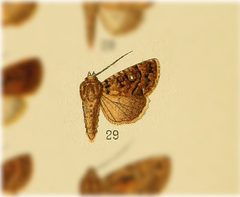
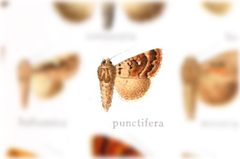
Wingspan 27 mm. Specific coloration and pattern details are not well documented in available sources. As a member of the Condica, it likely exhibits the relatively plain, dull coloration typical of the group, with forewings that may show subtle spotting or striation patterns.
Distribution
Southern Florida, USA; Bahamas; Cuba; Jamaica; Hispaniola (Haiti and Dominican Republic); Puerto Rico. Records from GBIF confirm presence in the conterminous 48 United States.
Similar Taxa
- Other Condica speciesMembers of this are generally small, dull-colored noctuids with similar wing shapes and often require genital dissection for reliable identification. C. punctifera is distinguished by its Caribbean distribution and potentially by wing spotting patterns.
More Details
Taxonomic Note
Authorship is sometimes cited as Walker, 1857, though Catalogue of Life lists 1856. The is placed in Condicinae, which was historically included within the broader concept of Noctuidae but is now often treated as a distinct lineage. Very few observations exist in iNaturalist (2 records as of source date), suggesting it is rarely encountered or underreported.