
Bagisara repanda
(Fabricius, 1793)
Wavy-lined Mallow Moth, Wavy Lined Mallow Moth
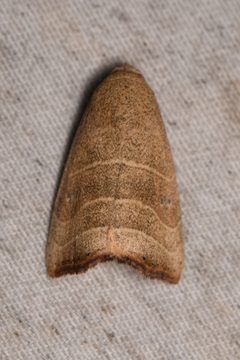
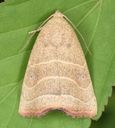
Bagisara repanda, commonly known as the Wavy-lined Mallow , is a small noctuid moth with a broad Neotropical and Nearctic distribution. are active year-round in tropical regions, with peak activity in late summer to fall in the southern United States. The was first described by Johan Christian Fabricius in 1793 and remains relatively understudied despite its wide geographic range.
Pronunciation
How to pronounce Bagisara repanda: /bəˈɡɪsərə rɪˈpændə/
These audio files are automatically generated. While they are not always 100% accurate, they are a good starting point.
Identification
Forewing length 10–12 mm. Distinguished from by wavy transverse lines on the forewings. The specific epithet "repanda" refers to the wavy or undulating wing pattern. Similar to other Bagisara but pattern details and geographic distribution help separate them.
Images
Habitat
Associated with open, disturbed areas where plants occur. Larval tied to presence of Sida and other Malvaceae.
Distribution
Southern United States (South Carolina to Florida, west to Texas), south through Central America (Guatemala, Panama), the Antilles, and South America (Paraguay, Colombia, Venezuela, Guyana, Brazil to Argentina). Also recorded from Galápagos Islands.
Seasonality
In Louisiana, most abundant late August to November. Year-round in tropics and possibly in Florida.
Diet
Larvae feed on Sida and possibly other Malvaceae. feeding habits not documented.
Host Associations
Human Relevance
Occasional pest potential on cultivated Malvaceae, though not documented as economically significant. Attracted to blacklights, making it accessible for citizen science observation and monitoring programs.
Similar Taxa
- Bagisara buxeaSame , similar size and general appearance; distinguished by wing pattern details and less frequent occurrence at light traps
- Other Noctuidae in subfamily BagisarinaeShared characteristics; requires examination of genitalia or detailed wing pattern analysis for definitive identification
Sources and further reading
- BugGuide
- Wikipedia
- GBIF taxonomy match
- iNaturalist taxon
- NCBI Taxonomy
- Catalogue of Life
- How Many Species of Moths at Bohart Museum's Moth Night? | Bug Squad
- Just repanda… er, wait a minute… | Beetles In The Bush
- Tigers along the Potomac: Bronzed Tiger Beetle, Cicindela repanda repanda — Bug of the Week
- Cicindelidae | Beetles In The Bush | Page 7
- Unexpected visitors | Beetles In The Bush