
Nocloa
Smith, 1906
Species Guides
8- Nocloa alcandra(Golden Nocloa)
- Nocloa aliaga(Lemon Nocloa)
- Nocloa cordova
- Nocloa duplicatus
- Nocloa nanata(Chihuahuan Nocloa)
- Nocloa pallens(Pale Nocloa)
- Nocloa plagiata
- Nocloa rivulosa(Rivulet Nocloa)
Nocloa is a of noctuid erected by John Bernhardt Smith in 1906. The genus comprises approximately 14 described distributed across the southwestern United States and Mexico. Species occur in arid and semi-arid regions including Arizona, New Mexico, California, Colorado, and various Mexican states.
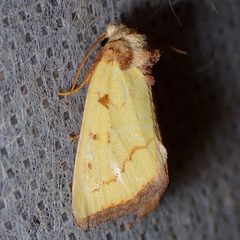
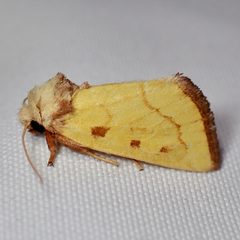
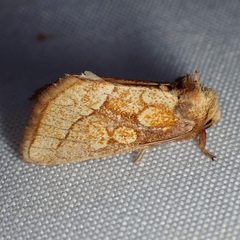
Pronunciation
How to pronounce Nocloa: //ˈnɔ.kloʊ.ə//
These audio files are automatically generated. While they are not always 100% accurate, they are a good starting point.
Identification
within Nocloa are distinguished by wing patterns and geographic distribution. Nocloa aliaga and Nocloa cordova are recorded from Arizona, while Nocloa nanata occurs in New Mexico and Nocloa pallens in California. The belongs to the tribe Psaphidini within Amphipyrinae.
Images
Habitat
are associated with arid and semi-arid environments of the southwestern United States and Mexico. Specific microhabitat preferences are documented for individual species rather than the as a whole.
Distribution
Southwestern United States (Arizona, New Mexico, California, Colorado) and Mexico.
Similar Taxa
- Other Psaphidini generaNocloa shares tribal placement with related noctuid ; differentiation requires examination of genitalic characters and wing pattern details.
More Details
Taxonomic history
The was established by J.B. Smith in 1906 with Nocloa plagiata as type . The genus has been classified within Amphipyrinae and more recently placed in tribe Psaphidini based on morphological and molecular evidence.